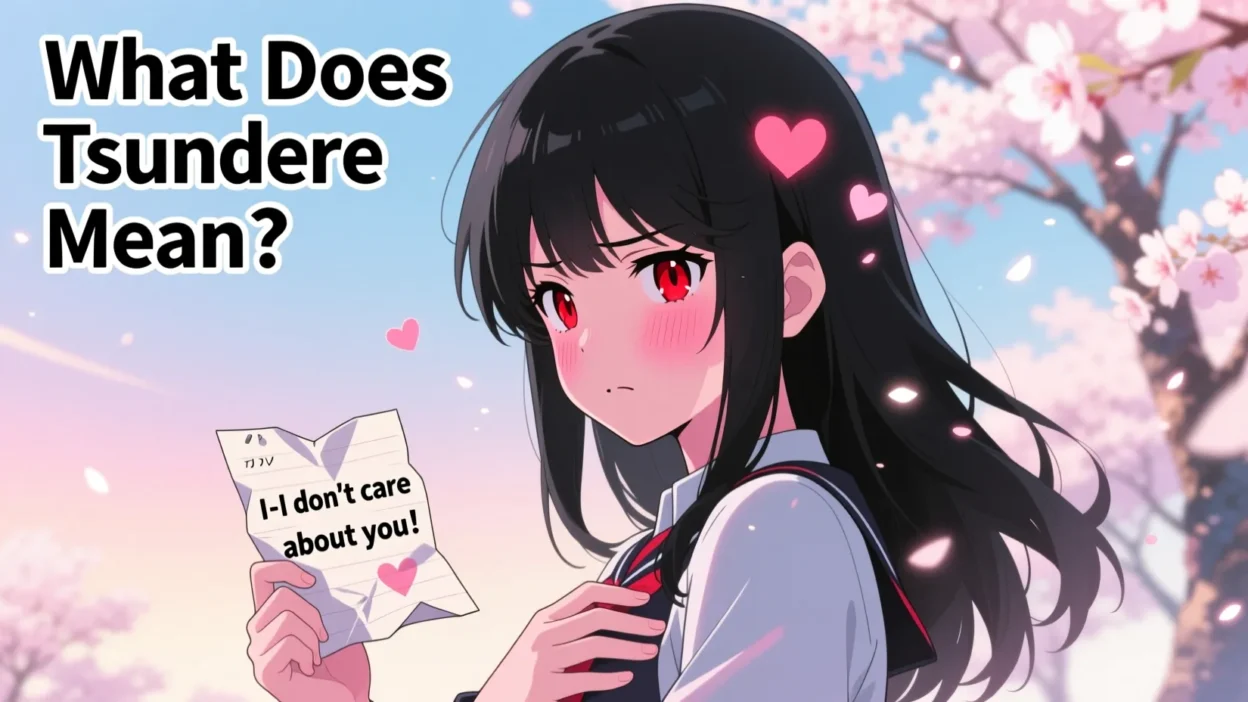
In this guide, what does Tsundere mean? We explain it in simple English. Tsundere is a Japanese term often used in anime, manga, and pop culture to describe a person—usually a character—who is initially cold, harsh, or hostile but gradually shows a warmer, kinder, or loving side. People use this term to talk about characters (or sometimes real people) who hide their true feelings behind a tough or blunt exterior.
The first time I saw the word “tsundere” online, I thought it was some kind of typo or random anime jargon. But then I noticed it everywhere — in TikTok videos, anime forums, and even in memes. Curious, I dug deeper and realized it’s actually a fun way to describe a very specific personality type. If you’ve ever been confused when someone called a character “tsundere”, you’re not alone.
Quick Answer: “Tsundere” is a Japanese term for someone who acts cold or hostile at first but gradually shows a warmer, affectionate side. It’s often playful, romantic, or comedic in tone.
What Does Tsundere Mean in Text?
In texting or online chats, “tsundere” describes a person who pretends to be annoyed, tough, or uninterested, but secretly cares or has affectionate feelings. It’s commonly used in anime communities to describe characters or sometimes people in real life.
Example:
“Stop being annoying… B-but I’m glad you came 😳”
→ Shows the classic tsundere mix of irritation and hidden affection.
In short:
Tsundere = cold exterior + warm interior = secretly affectionate personality.
Where Is Tsundere Commonly Used?
- Anime & manga discussions 🎌
- TikTok & YouTube clips — character reactions 🎥
- Texting between fans 💬
- Gaming chats — describing players or avatars 🎮
- Memes & jokes — playful teasing 😂
Tone:
Casual, playful, often romantic or comedic. Not formal.
Examples
A: you actually helped me… thanks
B: don’t get used to it! 😤
A: why are you staring at me?
B: i-i’m not! geez… 🙄
A: i made your favorite snack
B: hm, it’s fine… thanks 😳
A: come hang out this weekend
B: uh… i guess i’ll think about it 😤
A: you remembered my birthday!
B: d-don’t make a big deal out of it 😳
A: you’re so cute when you’re annoyed
B: w-what?! n-no i’m not! 😡
When to Use and When Not to Use
✅ When to Use
- Talking about anime or manga characters
- Describing someone with a playfully cold-but-caring personality
- In memes, jokes, or playful chats
- With friends or online communities who understand the term
❌ When Not to Use
- In professional or formal communication
- When someone might misinterpret it as offensive
- In serious or urgent situations
Comparison Table
| Context | Example Phrase | Why It Works (or Doesn’t) |
| Friend Chat | “Stop being tsundere 😤” | Fun & playful |
| Anime Forum | “That character is a total tsundere” | Accurate & descriptive |
| Work Chat | “Don’t be tsundere” | Too casual, confusing |
| “Please review the document” | Formal & clear |
Similar Slang Words or Alternatives
| Slang | Meaning | When to Use |
| Yandere | Obsessive & affectionate, sometimes dangerous | Anime/manga context |
| Kuudere | Calm, cool, unemotional but secretly caring | Character descriptions |
| Dandere | Quiet, shy, opens up to someone special | Anime/manga chats |
| Deredere | Outgoingly affectionate and loving | Casual or romantic |
| Bakadere | Clumsy and silly but lovable | Playful anime discussions |
FAQs
1. Is “tsundere” a compliment?
Yes, usually playful or affectionate. It highlights hidden warmth.
2. Can it describe real people?
Sometimes! Mostly used jokingly, inspired by anime.
3. Is it romantic?
Often, yes — but it can also be comedic or cute.
4. Where did the term come from?
It’s Japanese: “tsun” = cold/aloof, “dere” = affectionate/love.
5. Can I use it in casual chats?
Absolutely, as long as the audience knows anime culture.
Conclusion:
Now you know what does tsundere means? It describes someone who may seem cold or harsh at first but gradually shows a warmer, caring side. This term is popular in anime, manga, and online discussions to describe characters or people with a mix of toughness and hidden affection. Understanding tsundere behavior helps in recognizing that some people express their feelings in subtle or indirect ways.