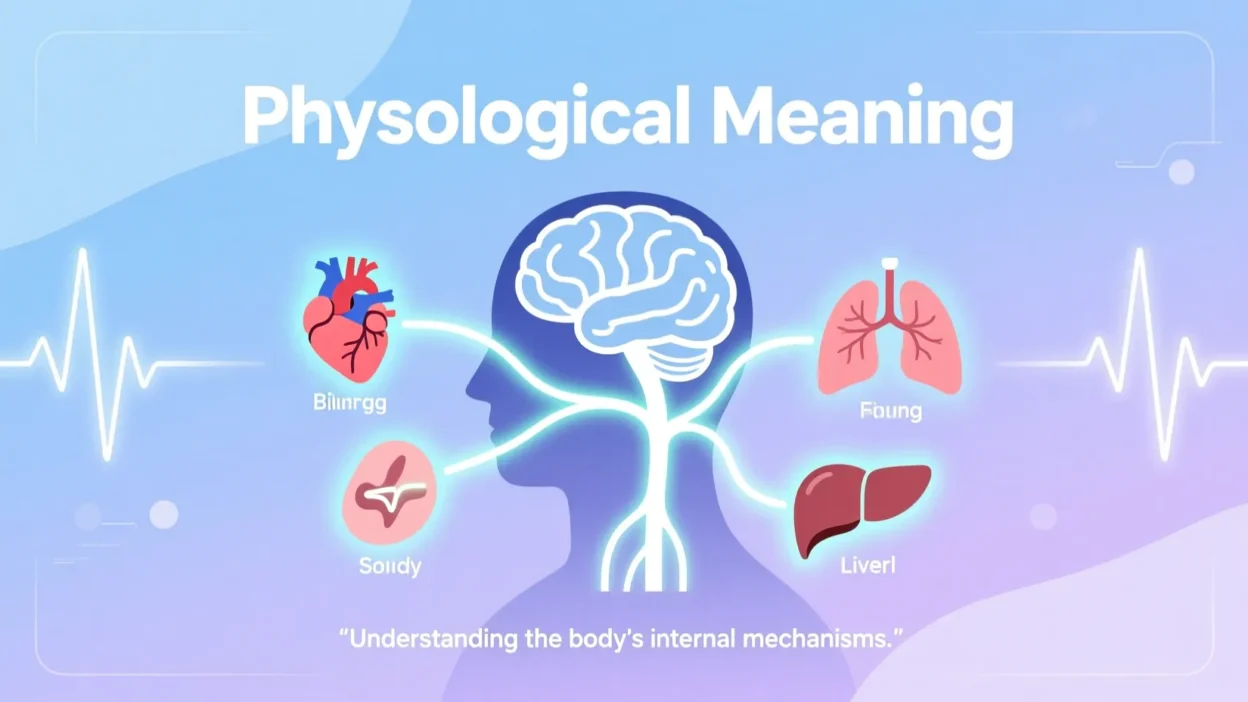
Physiological means anything related to the functions and processes of the body. When you hear it in health, science, or medicine, it usually describes how the body works naturally, like your heartbeat, breathing, digestion, or muscle movement. Understanding what is physiological helps explain what is normal for your body and how it responds to different situations.
If you’ve ever read a medical report, watched a fitness video, or sat through a biology class, you’ve probably seen the word .” The first time I heard it, I honestly thought it had something to do with “psychology” because the words look so similar. It wasn’t until I saw it used in health articles and workout discussions that I realized — okay, this must mean something more specific.
If you’ve felt the same confusion, you’re not alone.
Quick Answer:
Means anything related to the natural functions of the body — how your organs, cells, tissues, and systems work.
It’s a scientific, medical, and formal way of describing normal body processes.
What Does “Physiological” Mean in Simple Words? 🧠
The word comes from “physiology,” which is the study of how the body works.
So, means:
- related to the body’s natural processes
- connected to how organs function
- describing normal, healthy body activity
- not mental or emotional — strictly physical
For example:
- heart rate is physiological
- breathing is physiological
Example sentence:
“Sweating is a physiological response to heat.”
In short:
Physiological = body-related = natural physical functions.
Where Is Commonly Used? 📱
You’ll see this word in:
- 🧪 Science textbooks
- 👩⚕️ Medical reports
- 🧬 Biology classes
- 🏋️ Fitness & workout discussions
- 🧠 Research papers
- 🌡️ Health blogs
- 🧘 Stress management topics
It is:
- ✔️ Formal
- ✔️ Scientific/medical
- ❌ Not slang
- ❌ Rare in casual texting unless talking about health
Examples
1
A: Why do I sweat so much when I’m nervous?
B: That’s a physiological stress response.
2
A: What does its mean?
B: It’s about how the body works.
3
A: Is hunger a physiological thing?
B: Yes, it’s your body signaling it needs energy.
4
A: Why is my heart racing?
B: Could be a normal reaction.
5
A: Are emotions physiological?
B: The feelings are emotional, but the body reactions are physiological.
6
A: Is breathing automatic?
B: Yes, it’s a physiological process.
When to Use and When Not to Use 🕓
✅ Use:
- Talking about how the body works
- Explaining physical reactions
- Discussing medical or fitness topics
- Referring to biological processes
- Writing in scientific or formal settings
❌ Do NOT Use It When:
- Talking about emotions (use “psychological”)
- Chatting casually (it’s too formal)
- Describing mental states
- Referring to opinions, behaviors, or personality
Comparison Table
| Context | Example Phrase | Why It Works |
|---|---|---|
| Friend Chat | “Sweating is just a physiological reaction.” | Simple explanation |
| Work Chat | “This is a normal physiological response.” | Professional & clear |
| “Our study examines physiological changes.” | Formal & scientific |
Similar Terms or Alternatives 🔄
| Term | Meaning | When to Use |
|---|---|---|
| Biological | Related to living organisms | Science, nature, body functions |
| Physical | Related to the body or material world | Everyday or fitness contexts |
| Psychological | Related to the mind and emotions | Mental health or behavior |
| Anatomical | Related to body structure | Describing body parts |
| Neurological | Related to nerves/brain | Brain or nerve-related conditions |
FAQs
1. Is physiological the same as physical?
Not exactly. “Physical” is general; refers to body functions.
2. Mean healthy or normal?
Yes — it usually refers to natural, normal body processes.
3. Is stress physiological?
The reaction (heart rate, sweating) . The feeling is psychological.
4. What’s the opposite?
“Psychological,” which refers to the mind and emotions.
5. Is breathing?
Yes — it’s one of the core functions of the body.
6. Why do doctors use this word?
Because it’s a precise scientific term for body processes.
7. Is used in everyday conversation?
Rarely. It’s mostly used in medical, health, or academic contexts.
Conclusion:
In short, physiological describes how the body naturally works and functions. It helps us understand normal body processes like breathing, digestion, and circulation. Knowing what is physiological also guides doctors and scientists in detecting problems and keeping the body healthy.