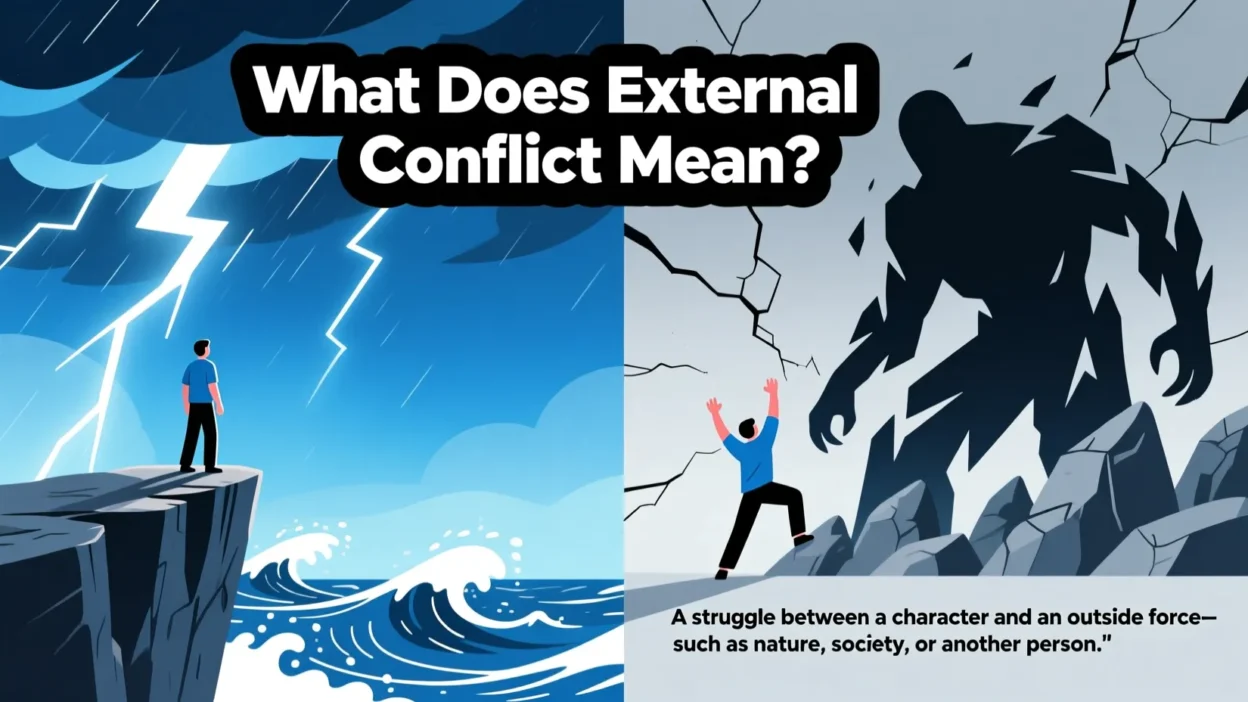
In this guide, we’ll explain what does external conflict mean? in simple, easy-to-grasp words. External conflict happens when a character struggles with something outside themselves — like another person, society, nature, or any challenge they must face. Understanding this makes it easier to spot conflicts in stories, movies, and even real-life situations.
The first time I read a story and someone mentioned “external conflict,” I thought it just meant characters arguing. But as I kept reading, I realized it’s a key storytelling concept that drives action, tension, and excitement. External conflict isn’t just about fights; it’s about characters facing obstacles in the outside world. If you’ve ever wondered what Outer conflict really means, how it differs from internal conflict, and how it’s used in stories, you’re in the right place.
Quick Answer: “External conflict” is a struggle between a character and an outside force, like another character, society, nature, or a situation. It’s the conflict that creates tension and moves the story forward.
What Does External Conflict Mean?
In literature, Outer conflict happens when a character faces challenges outside themselves. These obstacles could be:
- Other characters — rivalries, enemies, or antagonists
- Nature — storms, animals, or disasters
- Society — laws, cultural norms, or prejudice
- Situations or events — accidents, wars, or difficult circumstances
Example:
“Katniss faces Outer conflict when she battles the Capitol’s forces in The Hunger Games.”
→ She struggles against an outside force threatening her survival.
In short:
External conflict = character vs outside force = obstacle creating tension.
Where Is External Conflict Commonly Used?
You’ll see the term mostly in:
- Literature and English classes 📚
- Writing guides and storytelling blogs ✍️
- Book reviews and summaries 📝
- Film and TV analysis 🎬
- Creative writing workshops 🖋️
Tone:
Formal or educational — not casual slang, but often simplified for students.
Examples
A: what’s the main conflict in the story?
B: it’s external — she’s fighting the villain trying to take over the city
A: is Harry’s struggle internal or external?
B: mostly external, battling Voldemort and his followers
A: can you give an example for class?
B: sure — man vs nature: surviving a hurricane
A: my character keeps facing obstacles from society
B: perfect, that’s Outer conflict
A: what about a car chase scene?
B: also external — character vs situation
When to Use and When Not to Use
✅ When to Use
- Explaining story elements
- In literary analysis
- When teaching or studying writing techniques
- Discussing books, movies, or games
❌ When Not to Use
- Casual conversation unrelated to stories
- Situations where internal conflict is more relevant
- Non-literary contexts without explanation
Comparison Table
| Context | Example Phrase | Why It Works (or Doesn’t) |
| Class Discussion | “The external conflict is man vs society” | Educational, accurate |
| Book Review | “The story’s external conflict drives suspense” | Informative |
| Casual Chat | “The guy has external conflict lol” | Could be confusing if listener isn’t familiar |
| Film Analysis | “External conflict escalates in Act 2” | Clear & precise |
Similar Terms or Alternatives
| Term | Meaning | When to Use |
| Internal Conflict | Struggle within a character | Character-focused analysis |
| Man vs Man | Conflict between characters | Classic story type |
| Man vs Nature | Conflict with natural forces | Adventure/survival stories |
| Man vs Society | Conflict with societal norms | Social commentary |
| Man vs Technology | Conflict with machines or tech | Sci-fi or modern stories |
FAQs
1. Is external conflict the same as internal conflict?
No — Outer conflict involves outside forces, while internal conflict is inside a character’s mind.
2. Can a story have both?
Yes, many stories mix external and internal conflict for depth.
3. Is external conflict always physical?
Not always — it can be social, environmental, or situational.
4. Why is external conflict important?
It creates tension, drives the plot, and keeps readers engaged.
5. Can games or movies use external conflict?
Absolutely — it’s a universal storytelling device in all media.
Conclusion:
Now you understand what does external conflict mean and how it shows up in stories, movies, and real life. It’s all about struggles that come from outside a character, like other people, society, or nature. Recognizing external conflict makes reading and watching stories more interesting, and it helps you see how characters grow while facing challenges.