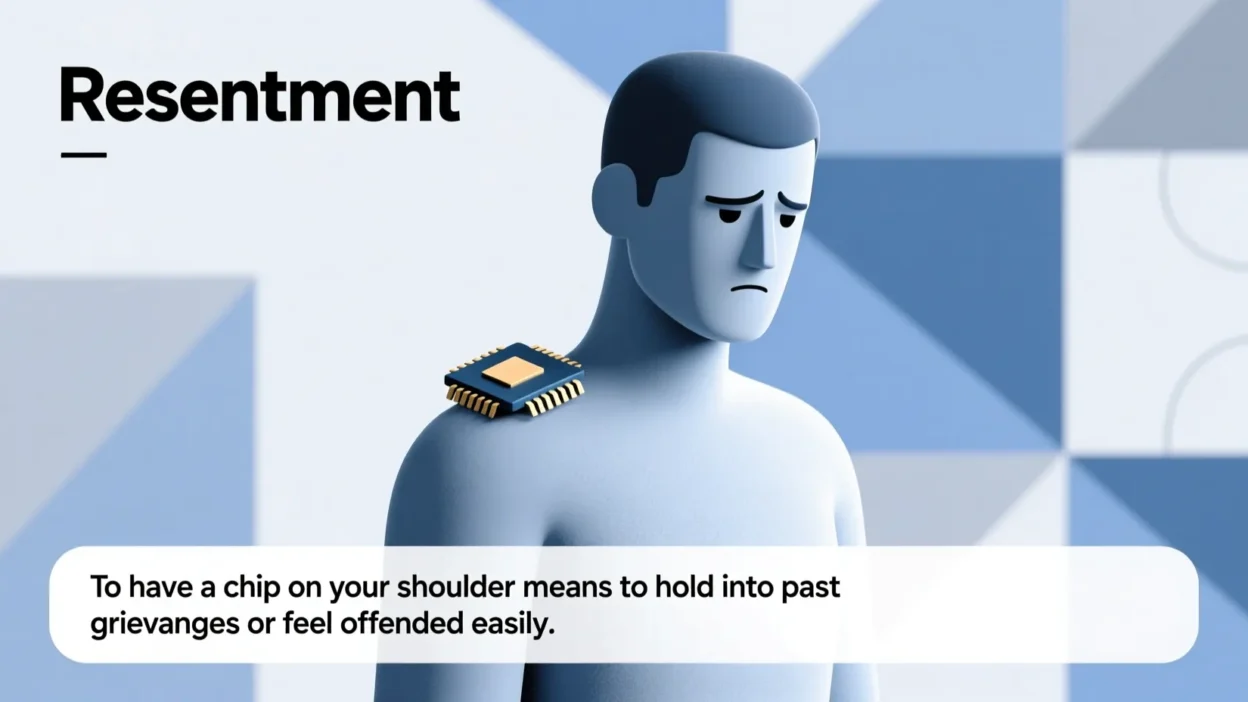
In this guide, we’ll explain what does chip on your shoulder mean in simple, easy-to-understand words. This phrase describes someone who seems angry, upset, or resentful about something from the past and is quick to take offense. Understanding this expression will help you recognize it in conversations, stories, or everyday situations.
The first time I heard someone say, “He’s got a chip on his shoulder,” I pictured a tiny wooden piece literally sitting on their shoulder — and I couldn’t stop laughing. But soon I realized it’s an idiom used to describe a person’s attitude. If you’ve ever wondered what it really means, why people say it, and how to use it correctly in conversations, this guide will explain it clearly.
Quick Answer: “Chip on your shoulder” means harboring anger, resentment, or feeling easily offended, often due to past experiences. It’s used to describe someone who seems defensive or combative.
What Does Chip on Your Shoulder Mean?
A “chip on your shoulder” is an attitude problem where someone carries grudges or feels wronged, often acting defensive or confrontational. The phrase originated from a 19th-century practice where someone would place a literal chip of wood on their shoulder, daring others to knock it off as a way to start a fight.
Simple Example:
“Ever since he got passed over for the promotion, he’s had a chip on his shoulder.”
→ He’s resentful and defensive because of the past event.
In short:
Chip on your shoulder = resentment or grudge = defensive or easily offended attitude.
Where Is Chip on Your Shoulder Commonly Used?
You’ll hear this idiom in:
- Everyday conversations 💬
- Workplace discussions 🏢
- Books or movies 📚🎬
- Social media commentary 🌐
- News articles or interviews 📰
Tone:
Casual to formal, depending on context. Often used figuratively.
Examples
A: why is he so rude to everyone?
B: he’s got a chip on his shoulder about his last job
A: she reacts strongly to criticism
B: yeah, seems like she’s carrying a chip on her shoulder
A: he always argues in meetings
B: classic chip on the shoulder situation
A: why won’t he let it go?
B: he’s holding onto that chip from years ago
A: my brother is defensive lately
B: sounds like a chip on the shoulder
When to Use and When Not to Use
✅ When to Use
- Describing someone acting defensive or resentful
- Talking about past grievances affecting behavior
- In casual, workplace, or literary contexts
- When explaining attitudes or personality traits
❌ When Not to Use
- As an insult without context
- In highly formal or legal communication
- When the person might not understand idioms
Comparison Table
| Context | Example Phrase | Why It Works (or Doesn’t) |
| Friend Chat | “He’s got a chip on his shoulder” | Casual, easily understood |
| Workplace | “She seems to have a chip on her shoulder after the meeting” | Polite, descriptive |
| Book/Article | “The character carries a chip on his shoulder” | Figurative, clear |
| Formal Report | “Individual exhibits defensiveness” | Avoids idiom, formal tone |
Similar Idioms or Alternatives
| Phrase | Meaning | When to Use |
| Grudge | Holding past resentment | Personal or professional situations |
| Bad blood | Lingering anger between people | Interpersonal conflicts |
| Resentment | Feeling of unfair treatment | Descriptive writing or speech |
| Easily offended | Quick to take offense | Everyday conversation |
| Defensive attitude | Guarded behavior | Professional or casual |
FAQs
1. Is it a literal chip?
No, it’s figurative, referring to resentment or anger.
2. Where did this phrase come from?
19th-century America — people literally placed wood chips on their shoulders to dare others to fight.
3. Can anyone have a chip on their shoulder?
Yes, anyone carrying resentment or defensiveness.
4. Is it always negative?
Mostly, but it can also describe determination to prove oneself.
5. Can it be used in writing?
Absolutely, especially in character descriptions.
6. Can it describe children or teenagers?
Yes, anyone showing defensiveness due to past experiences.
7. Is it formal or informal?
It can be used in both, but more common in informal or semi-formal contexts.
8. Can it be used humorously?
Yes, jokingly to describe minor grudges or stubbornness.
9. How do you respond if someone has a chip on their shoulder?
Be patient, understanding, and avoid triggering past issues.
10. Is it the same as being angry?
Not exactly — it’s more about carrying past grudges than immediate anger.
Conclusion:
Now you know what does chip on your shoulder mean? It describes someone who feels resentful or easily offended because of past experiences. Understanding this phrase helps you recognize it in conversations, stories, and daily situations. Knowing expressions like this makes communication clearer and helps you interpret people’s behavior more accurately.
Using this knowledge can help you respond more thoughtfully in tricky situations.
It also makes it easier to understand the emotions behind people’s actions.