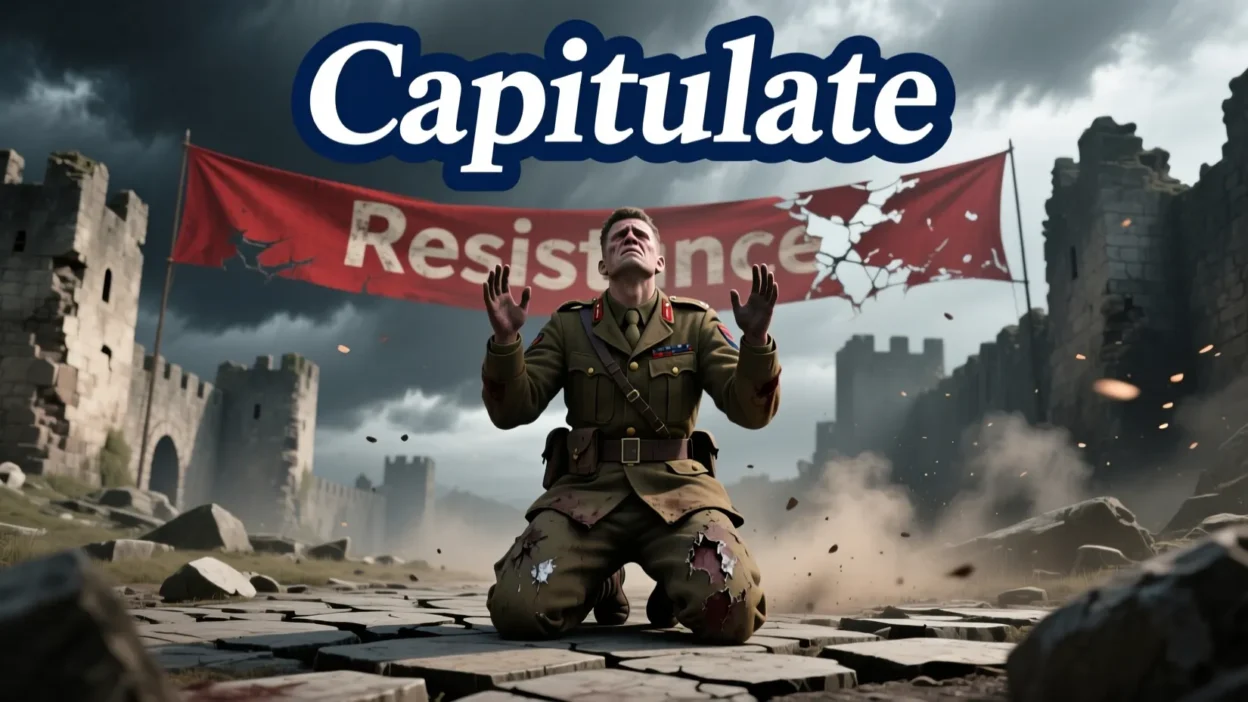
In this guide, we will explain what does capitulate mean? In simple words, capitulate means to give in, surrender, or accept defeat after resisting. You can use it when someone stops opposing or agrees to a demand after a struggle or argument. Knowing this word helps you describe situations where people or groups finally yield or submit under pressure.
Have you ever read a sentence like “The army was forced to capitulate” and wondered what capitulate means? The word is commonly used in historical contexts, news, literature, and even everyday speech to describe giving in or surrendering, often after a struggle. Understanding capitulate can help you better grasp formal writing, news reports, or discussions about negotiations and conflicts. Whether you’re reading history, analyzing current events, or discussing compromises, knowing when and how to use this word makes your communication more precise and sophisticated.
Quick Answer:
Capitulate means “to surrender, give in, or yield, often under pressure or after negotiation.”
It’s a formal and neutral-to-serious word used for both literal and figurative situations.
What Does Capitulate Mean?
Capitulate refers to:
- Surrendering or giving up after facing opposition or pressure
- Yielding to a demand, condition, or force
- Can be literal (military surrender) or figurative (agreeing in a debate)
Example sentence:
“After hours of negotiation, the company capitulated to the workers’ demands.”
In short:
Capitulate = Surrender / Give in / Yield under pressure.
Where Is Capitulate Commonly Used?
- 📰 News reports (military or political contexts)
- 📚 Historical writing and literature
- 💬 Formal discussions or debates
- ⚖️ Negotiations, business agreements, or diplomacy
It is:
- ✔️ Formal in tone
- ✔️ Often serious or analytical
- ✔️ Not commonly used in casual texting or informal conversation
Examples of Capitulate in Conversation
A: “The rebels refused to capitulate despite heavy losses.”
B: “That shows they were very determined.”
A: “After hours of arguing, I finally capitulated and let him choose the movie.”
B: “Sometimes it’s easier to just give in 😅”
A: “The nation had to capitulate after losing the war.”
B: “History books are full of such examples.”
A: “They capitulated to the client’s unreasonable demands.”
B: “Better to keep the business than risk conflict.”
A: “I won’t capitulate until I get the truth.”
B: “Good, stand your ground!”
When to Use and When Not to Use Capitulate
✅ When to Use
- Describing surrender or giving in formally
- Historical or military contexts
- Negotiations, debates, or serious discussions
❌ When Not to Use
- Casual texting or informal chats
- Minor disagreements or trivial matters
- Joking or sarcastic situations where “give up” is simpler
Comparison Table
| Context | Example Phrase | Why It Works |
| Military History | “The army capitulated after weeks of siege.” | Precise, formal, and historical |
| Business Negotiation | “The company capitulated to the new terms.” | Formal and professional |
| Casual Conversation | Avoid using | Sounds too formal for informal chats |
| Debate/Discussion | “He finally capitulated in the debate.” | Figurative, clear, and descriptive |
Similar Words or Alternatives
| Word | Meaning | When to Use |
| Surrender | Give up or yield | Formal or casual contexts |
| Yield | Give way or concede | Formal or neutral |
| Submit | Accept authority or conditions | Professional, legal, or serious use |
| Relent | Stop resisting or give in | Casual or literary contexts |
| Succumb | Fail to resist pressure or temptation | Formal, figurative, or descriptive |
FAQs
1. Is capitulate formal or casual?
It’s formal and often used in serious or professional contexts.
2. Can capitulate be used figuratively?
Yes — it can describe giving in during arguments, negotiations, or debates.
3. Is capitulate the same as surrender?
Yes — “surrender” is simpler, while “capitulate” is more formal and precise.
4. Can capitulate be used in business contexts?
Absolutely — it’s commonly used when a party gives in during negotiations.
5. Can capitulate be used in history or literature?
Yes — frequently used to describe military or political surrender in historical texts.
6. What’s an example of capitulate in a sentence?
“The small country capitulated after weeks of conflict.”
7. How do I know when to use capitulate?
Use it when someone gives in, yields, or surrenders, especially in formal, serious, or figurative situations.
Conclusion:
If you’re still wondering what does capitulate mean? it refers to giving in, surrendering, or accepting defeat after resisting. You can use capitulate to describe situations where someone finally yields under pressure or agrees to demands. Understanding this word helps you communicate more precisely about compromise, submission, or ending resistance in both conversations and writing.