In this guide, we’ll explain what does a yellow card mean in soccer? in simple, easy-to-understand words. A yellow card is a warning given by the referee to a player who breaks the rules, like committing a foul or behaving unfairly. Understanding this rule will help you follow the game better and know why referees stop play or caution certain players.
The first time I watched a soccer game, I saw the referee pull out a small yellow card and immediately thought, “Wait, is that a warning?” It turns out, that’s exactly what it is! Yellow cards are a key part of soccer rules and can really affect how a game is played. If you’ve ever wondered what a yellow card means, why it’s given, and what happens after a player receives one, this guide will explain everything clearly.
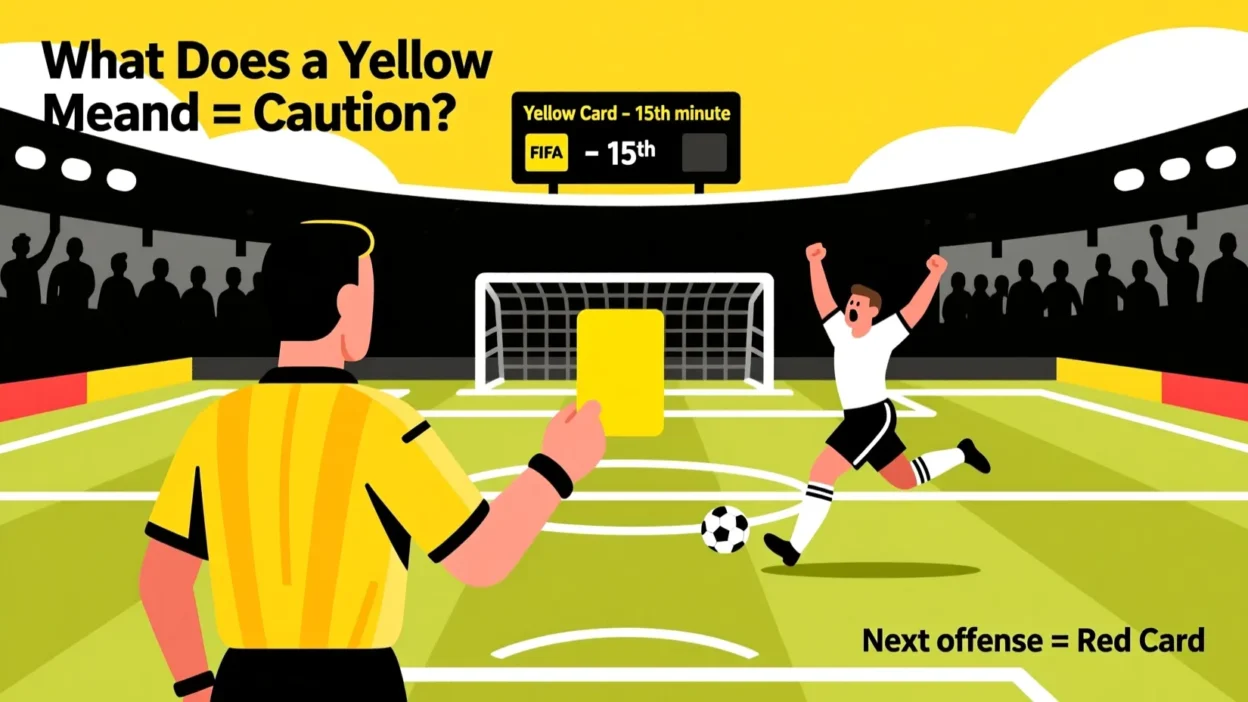
Quick Answer: A yellow card in soccer is a caution given by the referee for unsporting behavior, like fouls, dissent, or repeated rule-breaking. It warns the player to be careful, and accumulating two in a game leads to a red card (ejection).
What Does a Yellow Card Mean in Soccer?
A yellow card is essentially a formal warning from the referee. It indicates that a player has committed an offense serious enough to warrant caution but not severe enough for immediate ejection.
Common reasons for a yellow card include:
- Unsporting behavior — reckless tackles, dangerous play ⚡
- Dissent — arguing or showing disrespect to officials 😠
- Persistent fouling — repeated minor infractions 👣
- Time-wasting or delaying play ⏳
- Unsportsmanlike celebration 🎉
Simple Example:
“The defender got a yellow card for sliding into the striker dangerously.”
→ He is cautioned but stays in the game.
In short:
Yellow card = caution = warning for rule-breaking behavior.
Where Is Yellow Card Commonly Used?
You’ll hear this term in:
- Live soccer matches — stadiums and broadcasts 🏟️
- Sports commentary — TV, radio, or online ⚡
- Soccer tutorials and guides 📚
- Football apps & video games — FIFA, PES 🎮
- Fan discussions and social media 💬
Tone:
Official, rule-based, widely understood among players and fans.
Examples
A: why did the ref stop the game?
B: he gave a yellow card to the midfielder for a foul
A: that tackle looked dangerous
B: yeah, he got a yellow card for it
A: what happens if a player gets two yellow cards?
B: then it’s a red card — player is sent off
A: did the striker argue with the ref?
B: yep, another yellow card for dissent
A: is time-wasting allowed?
B: not really — yellow card can be given
When to Use and When Not to Use
✅ When to Use
- Talking about soccer rules or plays
- Explaining referee decisions
- Commentating or analyzing matches
- Chatting with soccer fans or players
❌ When Not to Use
- Casual conversation unrelated to soccer
- Situations where people may not know the rules
- Non-sports or professional contexts
Comparison Table
| Context | Example Phrase | Why It Works (or Doesn’t) |
| Game Commentary | “Yellow card for the defender!” | Clear, official, accurate |
| Fan Chat | “He totally deserved that yellow card 😤” | Casual, relatable |
| Sports Article | “Player received a yellow card for persistent fouling” | Informative, precise |
| Casual Chat | “Watch out or you’ll get a yellow card lol” | Fun, may confuse non-fans |
Similar Soccer Terms or Alternatives
| Term | Meaning | When to Use |
| Red Card | Player is ejected for serious offense | Serious fouls or 2 yellow cards |
| Foul | Breaking the rules against another player | Anytime describing infractions |
| Offside | Player in attacking position before the ball | Explaining game rules |
| Penalty Kick | Free kick awarded for a foul in the box | Scoring opportunities |
| Free Kick | Kick awarded after a foul outside the box | Rule explanation |
FAQs
1. What happens if a player gets a yellow card?
The referee cautions the player, so they must play carefully.
Two yellow cards in one game lead to a red card and ejection.
2. Can substitutes get yellow cards?
Yes, substitutes and even team officials can receive yellow cards.
3. Does a yellow card carry over to another match?
It depends on the league rules; some competitions reset after a stage or match.
4. Can a player contest a yellow card?
They can argue, but dissent itself may result in an additional yellow card.
5. Is a yellow card serious?
It’s a warning, but repeated or serious offenses can lead to ejection or suspension.
Conclusion:
Now you know what does a yellow card mean in soccer? It’s a warning from the referee for breaking the rules or playing unfairly. This helps you follow the game more easily and understand why the referee cautions certain players.Recognizing yellow cards helps you enjoy soccer with more insight and see how referees keep the match fair.
A yellow card also reminds players to play carefully and respect the rules.
By understanding these warnings, you can better appreciate the strategy and discipline in soccer.