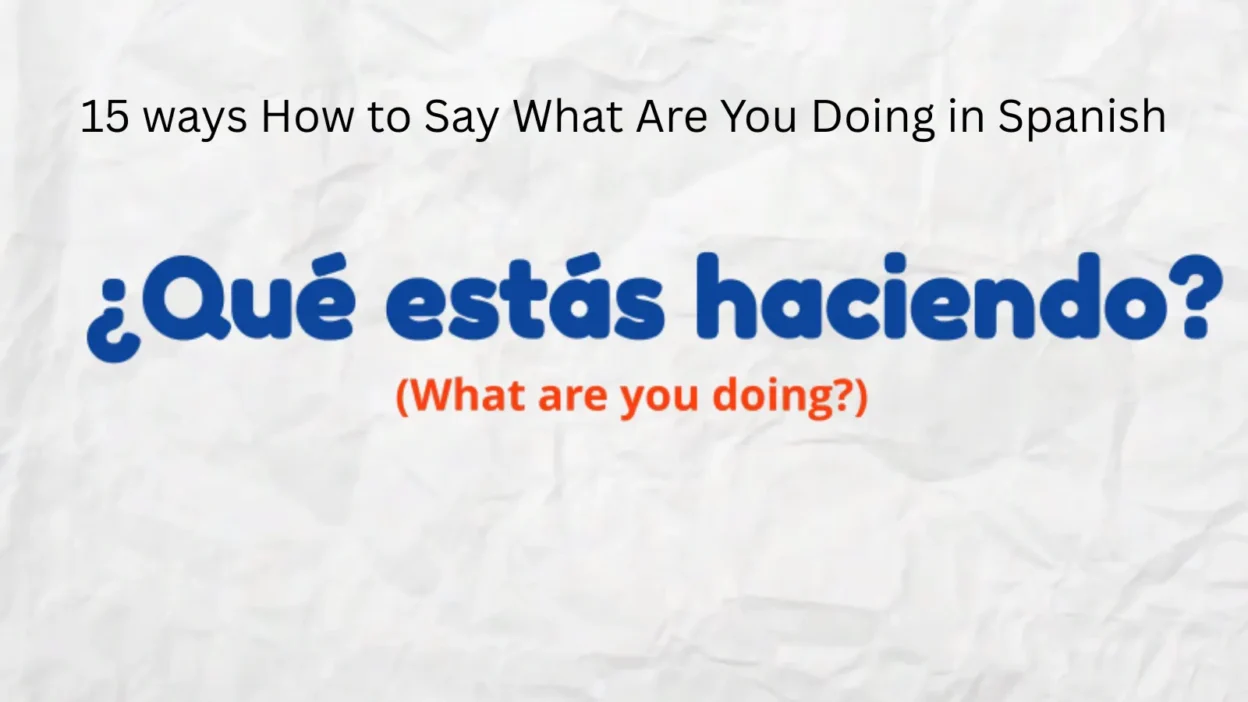
Learning How to say what are you doing in Spanish can make your conversations more engaging, natural, and culturally connected. Whether you’re chatting with friends, checking in on someone, or simply curious about their activities, knowing different ways to ask What are you doing? in Spanish helps you sound more fluent and confident.
From casual phrases to polite expressions, Spanish offers a variety of ways to convey this question depending on the situation. In this guide, you’ll discover 15 ways how to say what are you doing in Spanish, their meanings, and how to use them effectively in real conversations.
Say What Are You Doing in Spanish
Here are 15 authentic and useful ways to say What are you doing? in Spanish, complete with dialogue examples and cultural insights to help you speak naturally and confidently.
15 Ways to Say What are you doing? in Spanish
| Spanish Phrase | Pronunciation | Meaning | Context |
|---|---|---|---|
| ¿Qué haces? | keh AH-sehs | What are you doing? | Most common, neutral |
| ¿Qué estás haciendo? | keh ehs-TAHS ah-SYEHN-doh | What are you doing right now? | Present continuous, everyday use |
| ¿Qué andas haciendo? | keh AHN-dahs ah-SYEHN-doh | What are you up to? | Informal, casual |
| ¿Qué estás haciendo ahora? | keh ehs-TAHS ah-SYEHN-doh ah-OH-rah | What are you doing now? | Slightly more specific |
| ¿Qué estás haciendo tú? | keh ehs-TAHS ah-SYEHN-doh too | What are YOU doing? | Emphasis on “you” |
| ¿Qué haces en este momento? | keh AH-sehs ehn EHS-teh moh-MEN-toh | What are you doing at this moment? | Polite, formal |
| ¿Qué onda? | keh OHN-dah | What’s up? | Slang, Mexico |
| ¿Qué pasa? | keh PAH-sah | What’s happening? | Informal, casual |
| ¿Qué estás? | keh ehs-TAHS | What are you…? | Shortened, informal (Latin America) |
| ¿Qué rollo? | keh ROY-yoh | What’s up? / What are you doing? | Slang, Mexico |
| ¿Qué cuentas? | keh KWEHN-tahs | What’s new? | Friendly, casual |
| ¿Qué hay? | keh EYE | What’s going on? | Informal, short |
| ¿Qué tal? | keh TAHL | How’s it going? | General greeting, casual |
| ¿Qué se hace? | keh seh AH-seh | What’s being done? | Informal, sometimes rhetorical |
| ¿Qué estás por hacer? | keh ehs-TAHS por ah-SEHR | What are you about to do? | Neutral, future-oriented |
1. ¿Qué estás haciendo? (What are you doing?)
Origin:
This is the most direct and grammatically correct translation. It uses the present progressive tense—common in Latin American Spanish.
Example:
👤 Persona A: ¿Qué estás haciendo?
👤 Persona B: Estoy cocinando la cena.
Use: Neutral, everyday use across Latin America.
2. ¿Qué haces? (What do you do? / What are you doing?)
Origin:
Though it literally means “What do you do?”, in context it often means “What are you doing?” in Spanish.
Example:
👤 Persona A: ¡Hola! ¿Qué haces?
👤 Persona B: Nada, solo viendo una serie.
Use: Informal and super common in Spain and Latin America.
3. ¿Qué andas haciendo? (What are you up to?)
Origin:
Common in Mexico and other parts of Latin America, using andar (to walk/go about) adds a casual vibe.
Example:
👤 Persona A: ¿Qué andas haciendo esta tarde?
👤 Persona B: Pues, pensando en salir a caminar.
Use: Chill and friendly.
4. ¿Qué estás haciendo ahora? (What are you doing right now?)

Origin:
Adding “ahora” emphasizes immediacy. It’s clear and polite.
Example:
👤 Persona A: ¿Qué estás haciendo ahora?
👤 Persona B: Estoy trabajando, ¿por qué?
Use: Slightly more formal; good for clarity.
5. ¿Qué hay? (What’s up? / What’s going on?)
Origin:
A very casual way of checking in. Similar to “What’s new?”
Example:
👤 Persona A: ¡Ey! ¿Qué hay?
👤 Persona B: Todo bien, solo descansando.
Use: Slangy and informal; popular in Spain.
6. ¿Qué estás haciendo, pues? (So what are you doing?)
Origin:
“Pues” adds a conversational filler common in Mexico and Colombia.
Example:
👤 Persona A: ¿Qué estás haciendo, pues?
👤 Persona B: Aquí, viendo TikTok.
Use: Casual, adds emphasis or curiosity.
7. ¿Qué estás haciendo ahorita? (What are you doing right now?)
Origin:
“Ahorita” is a Mexican Spanish word meaning “right now”—though it can also mean “in a little bit” depending on tone.
Example:
👤 Persona A: ¿Qué estás haciendo ahorita?
👤 Persona B: Nada importante, dime.
Use: Common in Mexican Spanish.
8. ¿Qué hacés? (What are you doing?) [Rioplatense]
Origin:
Used in Argentina and Uruguay with vos instead of tú. Notice the accent in hacés.
Example:
👤 Persona A: Che, ¿qué hacés?
👤 Persona B: Estoy tomando mate.
Use: Informal, regional (Argentina, Uruguay).
9. ¿Qué estás haciendo, cariño? (What are you doing, honey?)
Origin:
Adding an affectionate word like cariño makes the phrase more intimate.
Example:
👤 Persona A: ¿Qué estás haciendo, cariño?
👤 Persona B: Pensando en ti.
Use: Romantic or affectionate.
10. ¿Qué haces por aquí? (What are you doing around here?)
Origin:
Used when you unexpectedly see someone in a place you didn’t expect.
Example:
👤 Persona A: ¡Hola! ¿Qué haces por aquí?
👤 Persona B: Vine a visitar a unos amigos.
Use: Friendly surprise or curiosity.
11. ¿Qué estás haciendo de bueno? (What good are you doing?)
Origin:
A casual twist often used in Caribbean and some South American regions.
Example:
👤 Persona A: ¿Qué estás haciendo de bueno hoy?
👤 Persona B: ¡Comiendo pastel! ¿Y tú?
Use: Light, playful way to ask.
12. ¿Qué estás haciendo tú? (What are YOU doing?)
Origin:
Adding tú adds emphasis, often for comparison or surprise.
Example:
👤 Persona A: Yo trabajo en la casa, ¿y tú? ¿Qué estás haciendo tú?
👤 Persona B: Estoy en el parque con los niños.
Use: Emphatic or contrastive.
13. ¿Y tú qué haces? (And what are you doing?)
Origin:
Used to turn the question back on someone, often after being asked first.
Example:
👤 Persona A: Estoy viendo una peli. ¿Y tú qué haces?
👤 Persona B: Yo cocino la cena.
Use: Friendly back-and-forth.
14. ¿Qué haces ahora mismo? (What are you doing right this moment?)
Origin:
“Ahora mismo” is stronger than “ahora”, emphasizing “this exact moment.”
Example:
👤 Persona A: ¿Qué haces ahora mismo?
👤 Persona B: Estoy en una videollamada.
Use: Very precise or urgent tone.
15. ¿Qué estás haciendo en este momento? (What are you doing at this moment?)
Origin:
Used in both formal and poetic contexts, sometimes to show seriousness.
Example:
👤 Persona A: ¿Qué estás haciendo en este momento importante?
👤 Persona B: Estoy tomando una decisión grande.
Use: Formal or meaningful situations.
FAQs
1. What is the most common way to say “What are you doing?” in Spanish?
The most common and casual way is “¿Qué estás haciendo?”
2. How do you pronounce “¿Qué estás haciendo?”
It is pronounced: keh es-TAHS ah-see-EN-doh
3. Is there a shorter, more casual version?
Yes, you can simply say “¿Qué haces?” (keh AH-ses).
4. Which one is more polite?
“¿Qué estás haciendo?” sounds more neutral and polite, while “¿Qué haces?” is more casual and friendly.
5. How do I ask this in a text/chat style slang?
You can say “¿Qué haces?” or shorten it to “q haces?” in texting.
6. How do I ask “What are you doing right now?”
You say “¿Qué estás haciendo ahora?”
7. How do I ask it formally (to elders or strangers)?
Use “¿Qué está haciendo?” (formal usted form).
8. How do you say “What are you doing tonight?” in Spanish?
You say “¿Qué vas a hacer esta noche?”
9. How do I say “What are you doing today?”
You say “¿Qué haces hoy?”
10. Can I use these phrases in both spoken and written Spanish?
Yes, all these phrases work in conversation, texting, and messaging.
Conclusion:
How to say what are you doing in Spanish will make your conversations sound more natural, confident, and culturally authentic. Whether you’re speaking with friends, co‑workers, or new acquaintances, using the right phrase for the situation helps you build stronger connections and show genuine interest.