Learning how to say please in German is one of the best ways to sound polite and respectful when speaking the language. The main word for “please” in German is “bitte”, but it can also mean “you’re welcome” or “here you go,” depending on the situation. Understanding how and when to use bitte will help you communicate naturally with native speakers and make a great impression in any conversation.
Whether you’re ordering food, asking for help, or thanking someone, using bitte correctly shows good manners and cultural awareness. Mastering this small but powerful word can instantly make your German sound more friendly and confident.
Say Please in German
15 Ways to Say Please in German
| No. | German Phrase | English Meaning | Usage / Context |
|---|---|---|---|
| 1 | Bitte | Please | General polite request |
| 2 | Bitte schön | Here you go / Please | Polite, friendly tone |
| 3 | Bitte sehr | You’re very welcome / Please | Extra polite |
| 4 | Würden Sie bitte …? | Would you please …? | Formal requests |
| 5 | Kannst du bitte …? | Can you please …? | Informal requests |
| 6 | Könnten Sie bitte …? | Could you please …? | Polite, formal |
| 7 | Bitte, helfen Sie mir | Please, help me | Asking for help formally |
| 8 | Bitte, komm her | Please, come here | Casual request |
| 9 | Mach das bitte | Please do that | Informal |
| 10 | Bitte warten | Please wait | Common in shops, offices, or announcements |
| 11 | Bitte nehmen Sie Platz | Please take a seat | Formal, respectful |
| 12 | Bitte nicht stören | Please do not disturb | Polite instruction |
| 13 | Bitte öffnen Sie die Tür | Please open the door | Polite formal request |
| 14 | Bitte sag mir | Please tell me | Informal |
| 15 | Bitte gib mir das | Please give me that | Casual, everyday use |
Ready to sound respectful, friendly, and fluent? Let’s look at 15 ways to say “please” in German—with example dialogues and the stories behind each one.
1. Bitte (Please)
Origin:
“Bitte” is the all-purpose word for “please” and “you’re welcome” in German. It comes from the verb bitten (to request or plead).
Example:
👤 User A: Kann ich ein Glas Wasser haben, bitte?
👤 User B: Natürlich! Kommt sofort.
(Translation: Can I have a glass of water, please? – Of course! Coming right up.)
Use: Universal; used in most polite requests.
2. Bitte schön (Here you go / You’re very welcome)

Origin:
Literally “please nicely” or “you’re welcome kindly,” this is often used when handing someone something or responding to thanks.
Example:
👤 User A: Danke für Ihre Hilfe.
👤 User B: Bitte schön!
(Translation: Thanks for your help. – You’re very welcome!)
Use: Very polite, slightly more formal than just “bitte.”
3. Bitte sehr (You’re very welcome / Please indeed)
Origin:
Similar to “bitte schön”, but with emphasis. “Sehr” means “very,” adding intensity to the courtesy.
Example:
👤 User A: Darf ich mich setzen?
👤 User B: Bitte sehr!
(Translation: May I sit down? – Please do!)
Use: Formal or enthusiastic politeness.
4. Könnten Sie bitte…? (Could you please…?)
Origin:
This is a standard polite phrase for formal requests. “Könnten” is the subjunctive of “can,” making it softer and more respectful.
Example:
👤 User A: Könnten Sie bitte die Tür schließen?
👤 User B: Natürlich.
(Translation: Could you please close the door? – Of course.)
Use: Very formal; ideal for customer service, work, or official settings.
5. Würden Sie bitte…? (Would you please…?)
Origin:
Another formal phrasing, “würden” is the conditional form of “would,” which adds deference to your tone.
Example:
👤 User A: Würden Sie bitte warten?
👤 User B: Ja, kein Problem.
(Translation: Would you please wait? – Yes, no problem.)
Use: Formal and polite; often used in written communication.
6. Darf ich bitte…? (May I please…?)
Origin:
“Darf” comes from “dürfen” (to be allowed to), a polite and proper way to ask for permission.
Example:
👤 User A: Darf ich bitte das Fenster öffnen?
👤 User B: Ja, gerne.
(Translation: May I please open the window? – Yes, gladly.)
Use: Polite, often used in classrooms or offices.
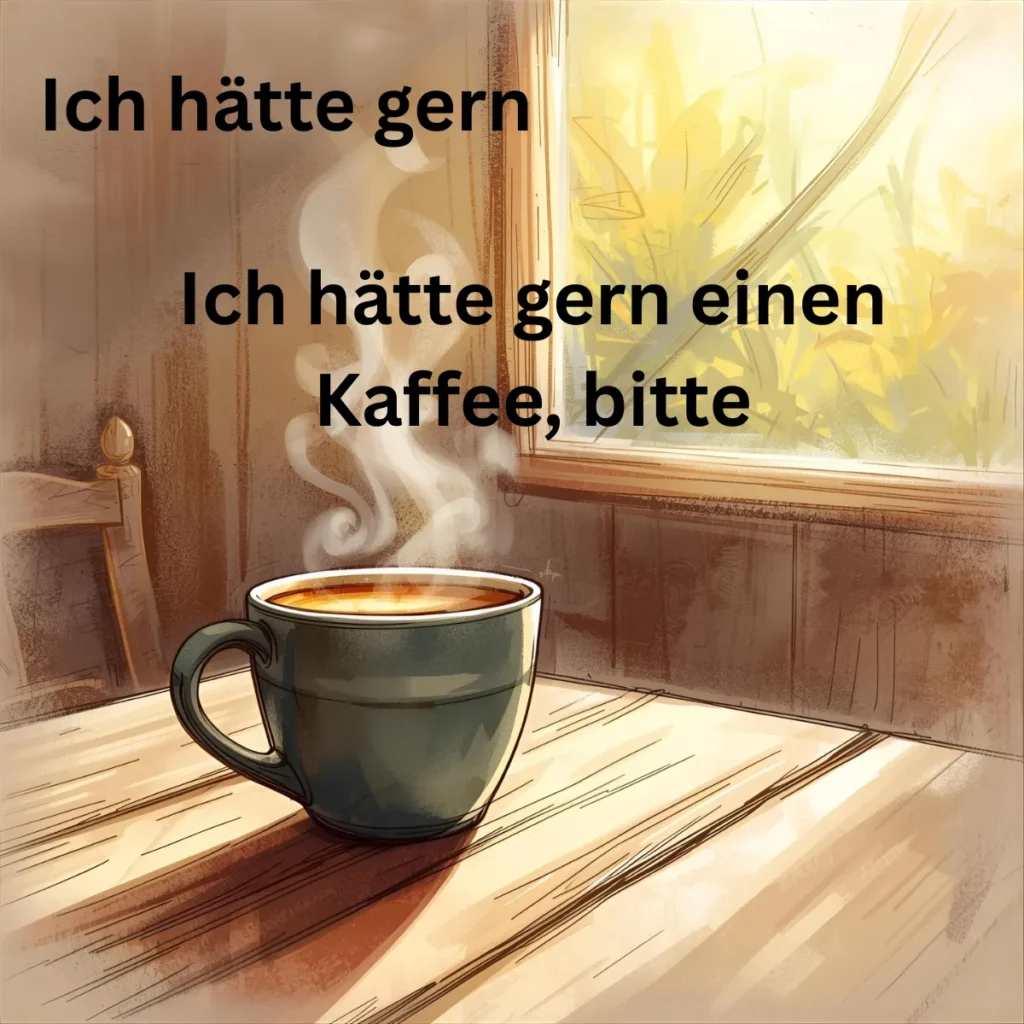
7. Ich hätte gern… (I would like…)
Origin:
Literally “I would have gladly,” this phrase is the standard way to order something politely.
Example:
👤 User A: Ich hätte gern einen Kaffee, bitte.
👤 User B: Kommt sofort.
(Translation: I’d like a coffee, please. – Coming right up.)
Use: Polite and common in restaurants, shops, and cafes.
8. Kann ich bitte…? (Can I please…?)
Origin:
Less formal than “darf ich,” this phrase still sounds polite and is commonly used in everyday situations.
Example:
👤 User A: Kann ich bitte dein Handy benutzen?
👤 User B: Klar, hier.
(Translation: Can I please use your phone? – Sure, here.)
Use: Casual politeness.
9. Bitte, wenn es dir nichts ausmacht (Please, if you don’t mind)
Origin:
Adds a considerate tone, literally “if it doesn’t matter to you.”
Example:
👤 User A: Könntest du das Fenster schließen, bitte, wenn es dir nichts ausmacht?
👤 User B: Kein Problem!
(Translation: Could you close the window, please, if you don’t mind? – No problem!)
Use: Friendly and thoughtful.
10. Wärst du so nett und…? (Would you be so kind and…?)
Origin:
A very polite and almost poetic request, this is equivalent to English’s “Would you be so kind as to…”
Example:
👤 User A: Wärst du so nett und hilfst mir beim Tragen?
👤 User B: Klar doch!
(Translation: Would you be so kind and help me carry this? – Sure!)
Use: Extra-polite, ideal when asking for a favor.
11. Könntest du mir bitte helfen? (Could you please help me?)
Origin:
This specific form is very commonly used when seeking help in a polite tone.
Example:
👤 User A: Könntest du mir bitte helfen, das zu reparieren?
👤 User B: Natürlich, kein Problem.
(Translation: Could you please help me fix this? – Of course, no problem.)
Use: Friendly politeness; useful in many contexts.
12. Bitte, sei so lieb… (Please, be so dear…)
Origin:
A sweet and affectionate way to request something, often between close friends or family.
Example:
👤 User A: Bitte, sei so lieb und bring mir ein Glas Wasser.
👤 User B: Mach ich!
(Translation: Please, be so sweet and bring me a glass of water. – Will do!)
Use: Soft and affectionate.
13. Könntest du eventuell…? (Could you possibly…?)
Origin:
“Eventuell” adds tentativeness and politeness, similar to “maybe” or “possibly” in English.
Example:
👤 User A: Könntest du eventuell später vorbeikommen?
👤 User B: Ich schau mal, ob’s klappt.
(Translation: Could you possibly come by later? – I’ll see if it works out.)
Use: Indirect and very polite.
14. Wäre es möglich, bitte…? (Would it be possible, please…?)
Origin:
A formal way to make a polite inquiry or request, commonly used in business emails.
Example:
👤 User A: Wäre es möglich, bitte einen Termin zu verschieben?
👤 User B: Ja, ich schaue gleich nach.
(Translation: Would it be possible to reschedule an appointment, please? – Yes, I’ll check right away.)
Use: Formal and diplomatic.
15. Einmal… bitte! (One… please!)
Origin:
Used in shops, food stalls, or bakeries when ordering something—like saying “One of these, please!”
Example:
👤 User A: Einmal Bratwurst mit Senf, bitte!
👤 User B: Kommt sofort!
(Translation: One bratwurst with mustard, please! – Coming right up!)
Use: Super common at counters and kiosks.
Conclusion:
Knowing how to say please in German with the word bitte opens doors to smoother and friendlier conversations. Whether you’re ordering food, asking for help, or showing appreciation, bitte makes your interactions polite and respectful. Mastering its different uses will make your German sound both natural and welcoming.