Mom” in Korean can be said in different ways depending on formality and context. The most common word is “엄마 (Eomma)”, which is used by children or adults when speaking casually or affectionately. In polite situations, Koreans often use “어머니 (Eomeoni).”
Many users search for how to say mom in Korean when learning the language, watching K-dramas, or wanting to speak respectfully with Korean family members. The user intent is clear: they want simple, correct words that match casual or formal situations without confusion.
In this guide, you will learn the common ways to say “mom” in Korean, when to use each term, and how they sound in daily conversations. These easy explanations help beginners speak naturally and respectfully in Korean.
Say Mom in Korean
Let’s explore 15 meaningful ways to say mom in Korean, complete with dialogue examples and cultural context!
15 Ways to Say Mom in Korean
| No. | Korean Phrase | Romanization | Meaning / Usage |
|---|---|---|---|
| 1 | 엄마 | eomma | Mom (informal, most common) |
| 2 | 어머니 | eomeoni | Mother (formal, polite) |
| 3 | 어머님 | eomeonim | Mother (honorific, very polite) |
| 4 | 우리 엄마 | uri eomma | My mom / Our mom (affectionate) |
| 5 | 엄마야 | eommaya | Hey mom! (calling out) |
| 6 | 엄마 사랑해 | eomma saranghae | I love you, mom (informal) |
| 7 | 어머니 감사합니다 | eomeoni gamsahamnida | Thank you, mother (formal) |
| 8 | 엄마 보고 싶어 | eomma bogo sipeo | I miss you, mom |
| 9 | 우리 어머니 | uri eomeoni | My/Our mother (polite) |
| 10 | 엄마 힘내 | eomma himnae | Stay strong, mom |
| 11 | 어머니께 | eomeonikke | To mother (formal writing) |
| 12 | 엄마 잘 지내? | eomma jal jinae? | How are you, mom? |
| 13 | 어머나! | eomeona! | Oh my gosh! (exclamation, derived from “mother”) |
| 14 | 친엄마 | chin-eomma | Biological mom |
| 15 | 새엄마 | sae-eomma | Stepmom |
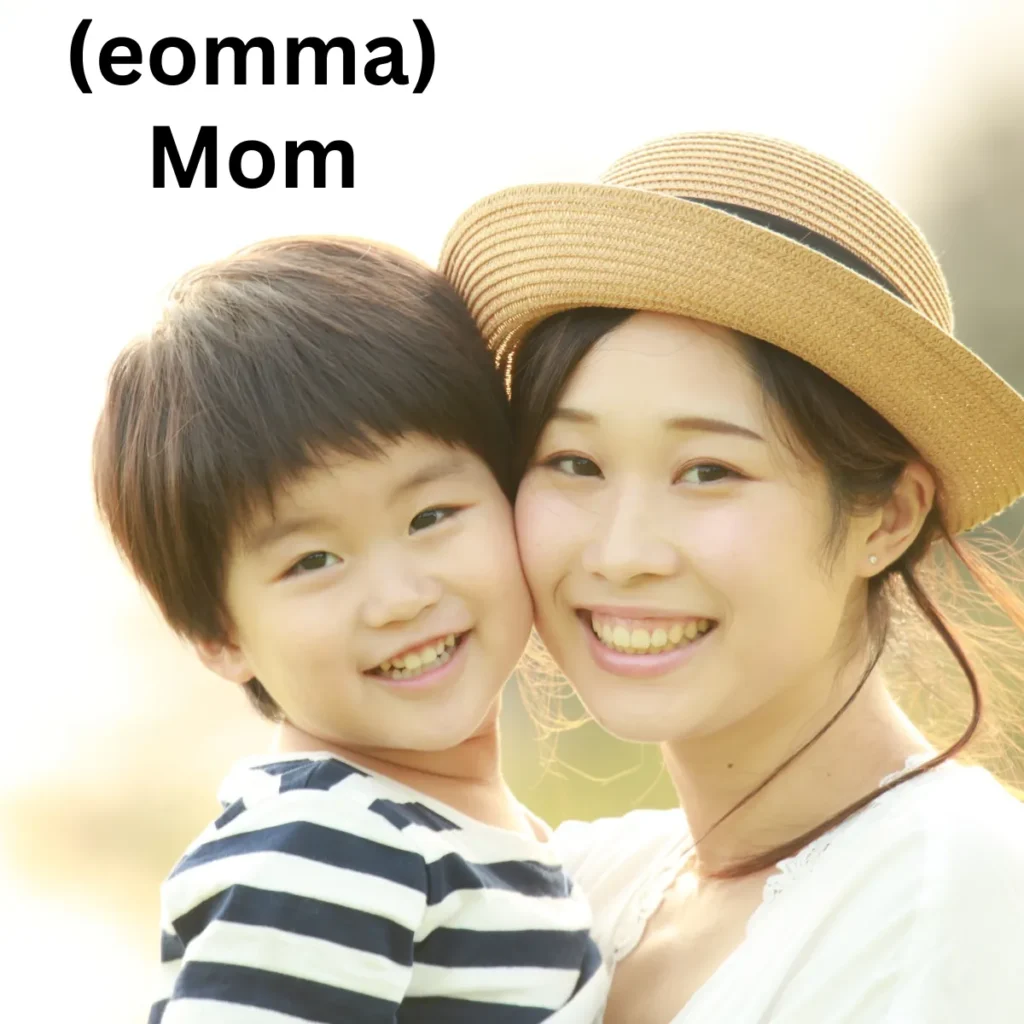
1. 엄마 (eomma) – Mom / Mommy
Origin:
This is the most common and affectionate term. It’s similar to “mom” or “mommy” in English, used by both children and adults.
Example:
👤 User A: 엄마, 나 학교 다녀올게요. (Eomma, na hakgyo danyeo-olgeyo.)
👤 User B: 그래, 조심히 다녀와! (Geurae, josimhi danyeowa!)
→ Mom, I’m off to school.
→ Okay, be safe!
Use: Everyday use; affectionate and widely used by Korean children and adults alike.
2. 어머니 (eomeoni) – Mother
Origin:
A more formal or respectful version of “엄마,” often used in polite conversation or to refer to someone else’s mother.
Example:
👤 User A: 어머니, 안녕하세요? (Eomeoni, annyeonghaseyo?)
👤 User B: 어서 와요. 반가워요. (Eoseo wayo. Bangawoyo.)
→ Hello, mother. How are you?
→ Welcome. Nice to see you.
Use: Formal; used to show respect to your own or someone else’s mother.
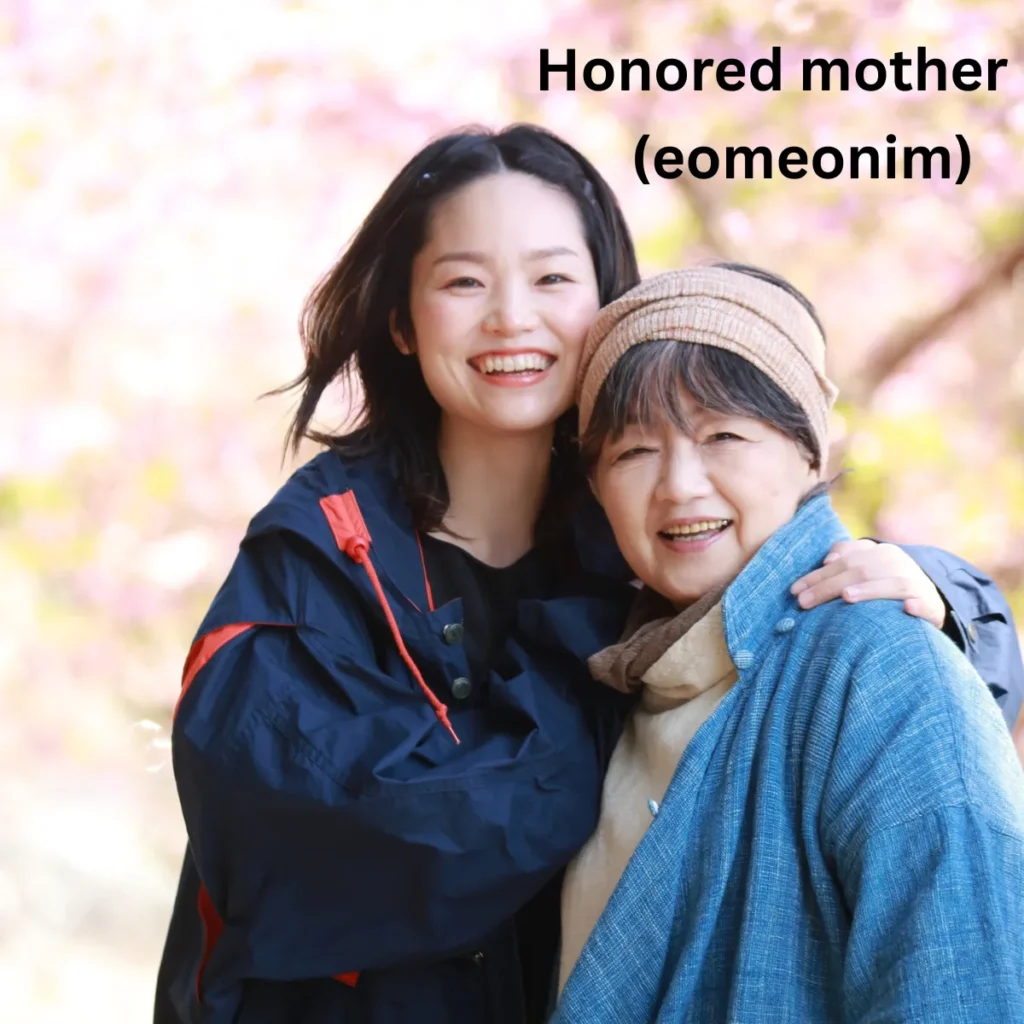
3. 어머님 (eomeonim) – Honored mother
Origin:
An honorific form of 어머니, often used when addressing a mother-in-law or someone else’s mother respectfully.
Example:
👤 User A: 어머님, 건강은 괜찮으세요? (Eomeonim, geongangeun gwaenchaneuseyo?)
👤 User B: 고마워요, 덕분에 잘 지내요. (Gomawoyo, deokbune jal jinaeyo.)
→ Mother-in-law, how’s your health?
→ Thank you, I’ve been well.
Use: Very respectful; often used by spouses or in-laws.
4. 엄마야 (eommaya) – Oh mom! (Exclamation)
Origin:
Used in surprise, shock, or affection. It’s like saying “Oh, mom!” or “Oh my god!” in English.
Example:
👤 User A: 엄마야! 그게 뭐야?! (Eommaya! Geuge mwoya?!)
👤 User B: 그냥 장난감이야. (Geunyang jangnanggam-iya.)
→ Oh mom! What is that?!
→ It’s just a toy.
Use: Emotional or exclamatory expression; informal.
5. 맘 (mam) – Mom (Konglish/Slang)
Origin:
A borrowed version of the English word “mom,” used in casual speech or texting.
Example:
👤 User A: 맘, 나 배고파. (Mam, na baegopa.)
👤 User B: 곧 밥 먹자. (Got bap meokja.)
→ Mom, I’m hungry.
→ We’ll eat soon.
Use: Informal; often used in texting or by young people.
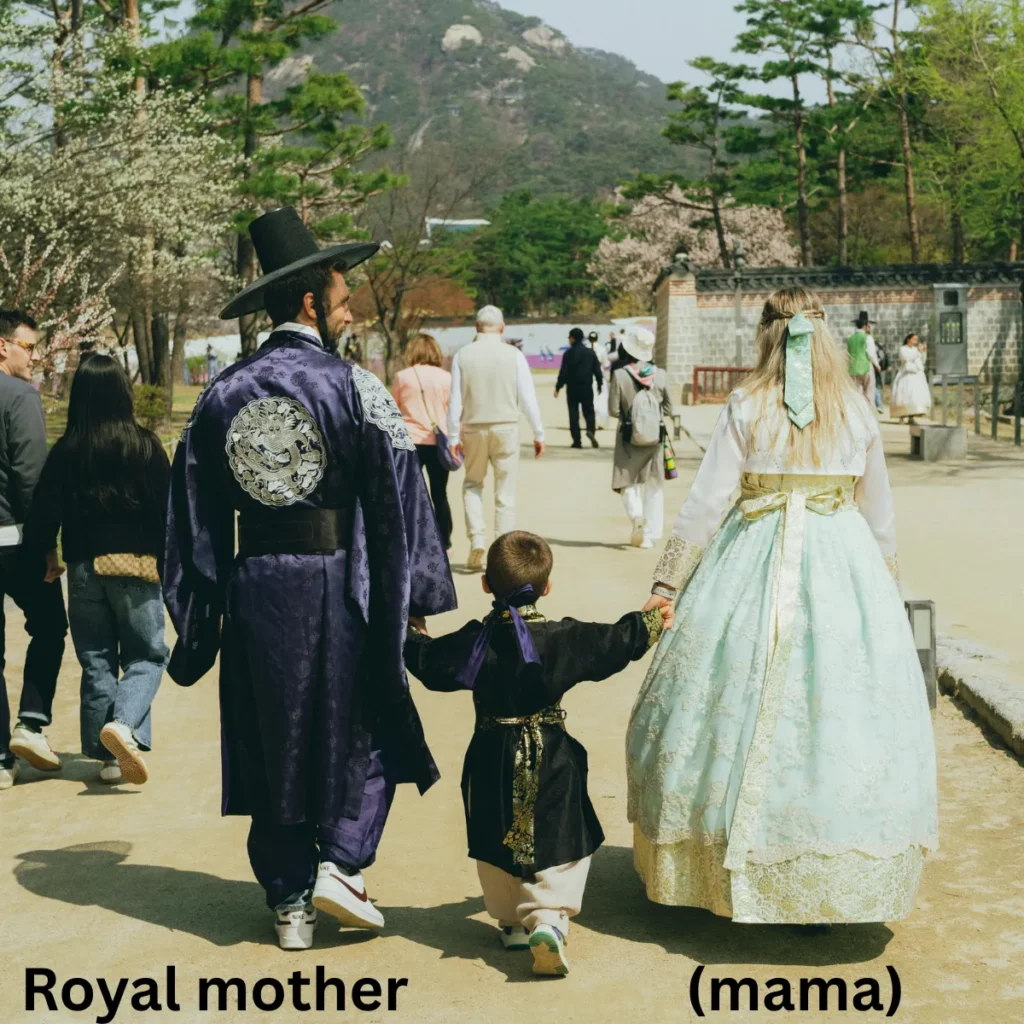
6. 마마 (mama) – Royal mother / My lady
Origin:
An old-fashioned, royal way to address queens or noblewomen in Joseon-era Korea. Seen in historical dramas.
Example:
👤 User A: 마마, 중전마마께 인사드립니다. (Mama, jungjeon mama-kke insadeurimnida.)
👤 User B: 허하노라. (Heohanora.)
→ My lady, I offer my greetings.
→ You may rise.
Use: Historical or royal speech; common in K-dramas.
7. 엄니 (eomni) – Mom (regional dialect)
Origin:
A regional or old-fashioned pronunciation of 엄마 or 어머니, used in some southern provinces or countryside.
Example:
👤 User A: 엄니, 저녁 뭐 해줘요? (Eomni, jeonyeok mwo haejwoyo?)
👤 User B: 고등어 조림 할까? (Godeungeo jorim halkka?)
→ Mom, what’s for dinner?
→ Shall I make braised mackerel?
Use: Dialectal; often heard in rural or older people speech.
8. 자기 엄마 (jagi eomma) – One’s own mom
Origin:
Used when referring to someone’s mom, usually in the third person.
Example:
👤 User A: 걔 자기 엄마랑 사이 좋아. (Gyae jagi eommang sai joha.)
→ He gets along well with his mom.
Use: Neutral; used when talking about your or someone else’s mom.
9. 친엄마 (chin-eomma) – Biological mother
Origin:
Prefix “친” means “biological” or “real.” Used to clarify when comparing adoptive vs. biological relationships.
Example:
👤 User A: 친엄마를 최근에 다시 만났대. (Chin-eommareul choegeune dasi mannassdae.)
→ She recently reunited with her biological mom.
Use: Technical or legal situations.
10. 양엄마 (yang-eomma) – Adoptive mother
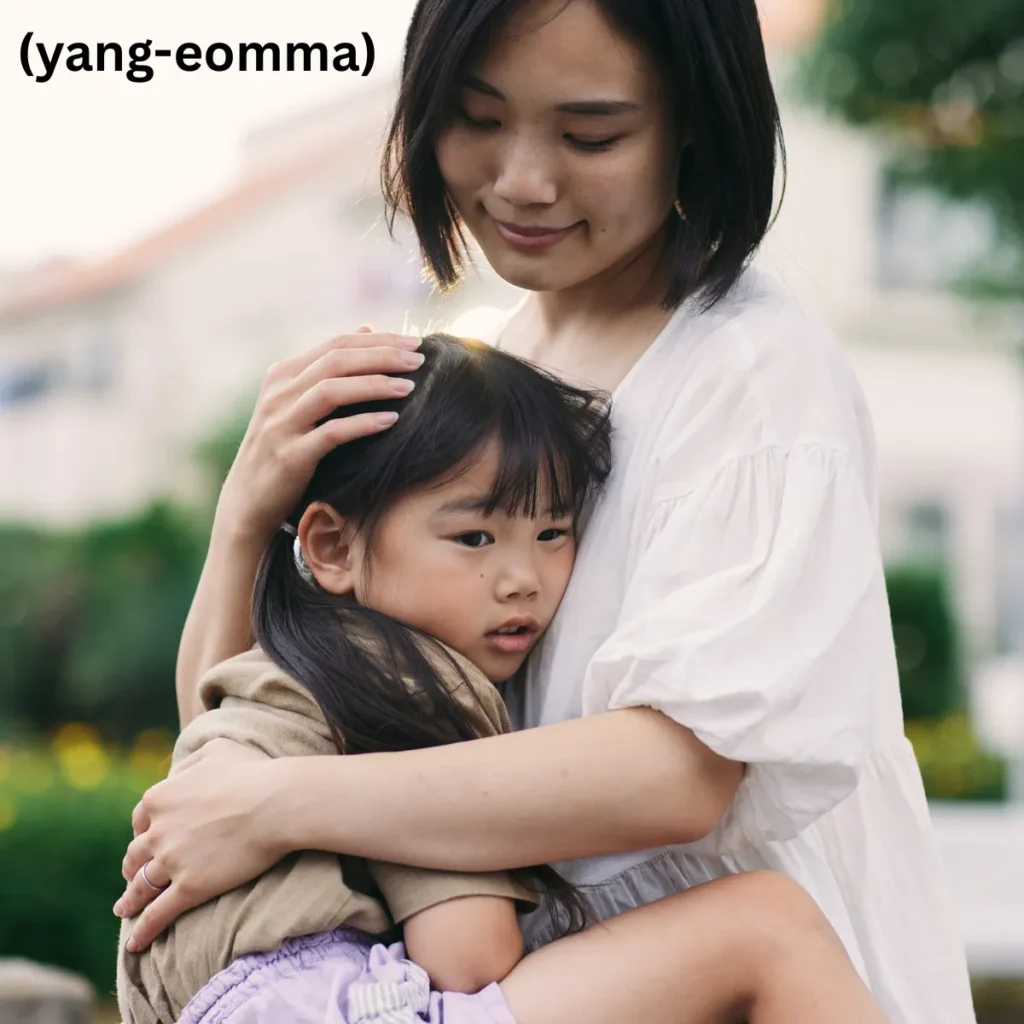
Origin:
“양” means “adopted.” Often seen in legal, social, or media settings.
Example:
👤 User A: 그녀는 양엄마 밑에서 컸대. (Geunyeoneun yang-eomma miteseo keossdae.)
→ She was raised by her adoptive mother.
Use: Formal or descriptive.
11. 새엄마 (sae-eomma) – Stepmother
Origin:
“새” means “new.” This term is used for stepmothers in blended families.
Example:
👤 User A: 새엄마랑도 잘 지내? (Sae-eommareangdo jal jinae?)
👤 User B: 응, 지금은 많이 가까워졌어. (Eung, jigeumeun mani gakkawojyeosseo.)
→ Do you get along with your stepmom?
→ Yes, we’ve grown close now.
Use: Neutral to emotional, depending on context.
12. 엄마 되다 (eomma doeda) – To become a mom
Origin:
Not a term for mom, but refers to someone becoming a mother.
Example:
👤 User A: 나 엄마 됐어! (Na eomma dwaesseo!)
👤 User B: 정말?! 축하해! (Jeongmal?! Chukhahae!)
→ I became a mom!
→ Really?! Congratulations!
Use: Used when someone has just had a baby.
13. 우리 엄마 (uri eomma) – Our mom (actually means “my mom”)
Origin:
“Uri” means “our,” but Koreans often say “our mom” to refer to my mom—showing shared closeness and community.
Example:
👤 User A: 우리 엄마 김치 진짜 맛있어. (Uri eomma gimchi jinjja masisseo.)
→ My mom’s kimchi is really delicious.
Use: Culturally intimate; common Korean phrasing.
14. 어무이 (eomui) – Mom (Gyeongsang dialect)
Origin:
Used in southeastern dialects like Busan or Daegu.
Example:
👤 User A: 어무이~ 나왔심더! (Eomui~ nawassimdeo!)
👤 User B: 아이고, 고생했다~ (Aigo, gosaenghaetda~)
→ Mom~ I’m home!
→ Oh, you must be tired.
Use: Dialect; warm and regional.
15. 어마마마 (eomamama) – Royal Mom (historical dramas)
Origin:
Used in ancient court settings by princes and princesses to refer to the queen or their mother.
Example:
👤 User A: 어마마마~ (Eomamama~)
👤 User B: 내 새끼~ (Nae saekki~)
→ Royal mother!
→ My precious child!
Use: Historical fiction or drama.
Conclusion:
Learning how to say mom in Korean helps you connect emotionally and culturally with the language. The affectionate eomma (엄마) is used most often, especially in informal family settings. By understanding variations—from casual to formal—you’ll not only expand your vocabulary but also gain insight into the close bonds expressed in Korean culture.


