How to Say Merry Christmas in French is something every holiday lover should know — especially if you’re sending wishes to French-speaking friends or traveling to France during the festive season.
The most common phrase is “Joyeux Noël!”, but there’s more to explore beyond just two words. Whether you’re writing a card, sharing a toast, or posting on social media, learning these holiday greetings can add warmth and authenticity to your message. Let’s dive into the joyful world of French Christmas expressions!
Say Merry Christmas in French
🎄 Here’s a 15-phrases table for Merry Christmas in French with translations and usage:
| # | French Phrase | English Meaning | Usage / Context |
|---|---|---|---|
| 1 | Joyeux Noël | Merry Christmas | Standard, most common greeting. |
| 2 | Bon Noël | Good Christmas | Shorter, friendly version. |
| 3 | Joyeux réveillon | Happy Christmas Eve | Used on Dec 24th (Christmas Eve). |
| 4 | Passe un joyeux Noël | Have a Merry Christmas | Informal, with friends/family. |
| 5 | Je te souhaite un joyeux Noël | I wish you a Merry Christmas | Warm and personal. |
| 6 | Je vous souhaite un joyeux Noël | I wish you a Merry Christmas | Formal or plural (respectful). |
| 7 | Joyeux Noël à tous | Merry Christmas to all | Used for groups. |
| 8 | Meilleurs vœux de Noël | Best Christmas wishes | Polite, written in cards. |
| 9 | Que ton Noël soit joyeux | May your Christmas be joyful | Slightly poetic, caring. |
| 10 | Joyeuses fêtes | Happy Holidays | Inclusive for the whole season. |
| 11 | Bonnes fêtes de Noël | Happy Christmas holidays | Common in speech & writing. |
| 12 | Noël joyeux et lumineux | A joyful and bright Christmas | Warm and affectionate. |
| 13 | Que la magie de Noël soit avec toi | May the magic of Christmas be with you | Sentimental, affectionate. |
| 14 | Joyeux Noël et bonne année | Merry Christmas and Happy New Year | Very common festive greeting. |
| 15 | Passez un merveilleux Noël | Have a wonderful Christmas | Formal, polite. |
✨ This list includes formal, informal, and warm festive greetings you can use in French.
1. Joyeux Noël – Merry Christmas
Origin:
The most standard and universally recognized greeting. “Joyeux” means “joyful” and “Noël” comes from Latin natalis, meaning birth (of Christ).
Example:
👤 User A: Joyeux Noël, Claire !
👤 User B: Joyeux Noël à toi aussi, Paul !
Use: Classic, appropriate for cards, emails, and conversations.
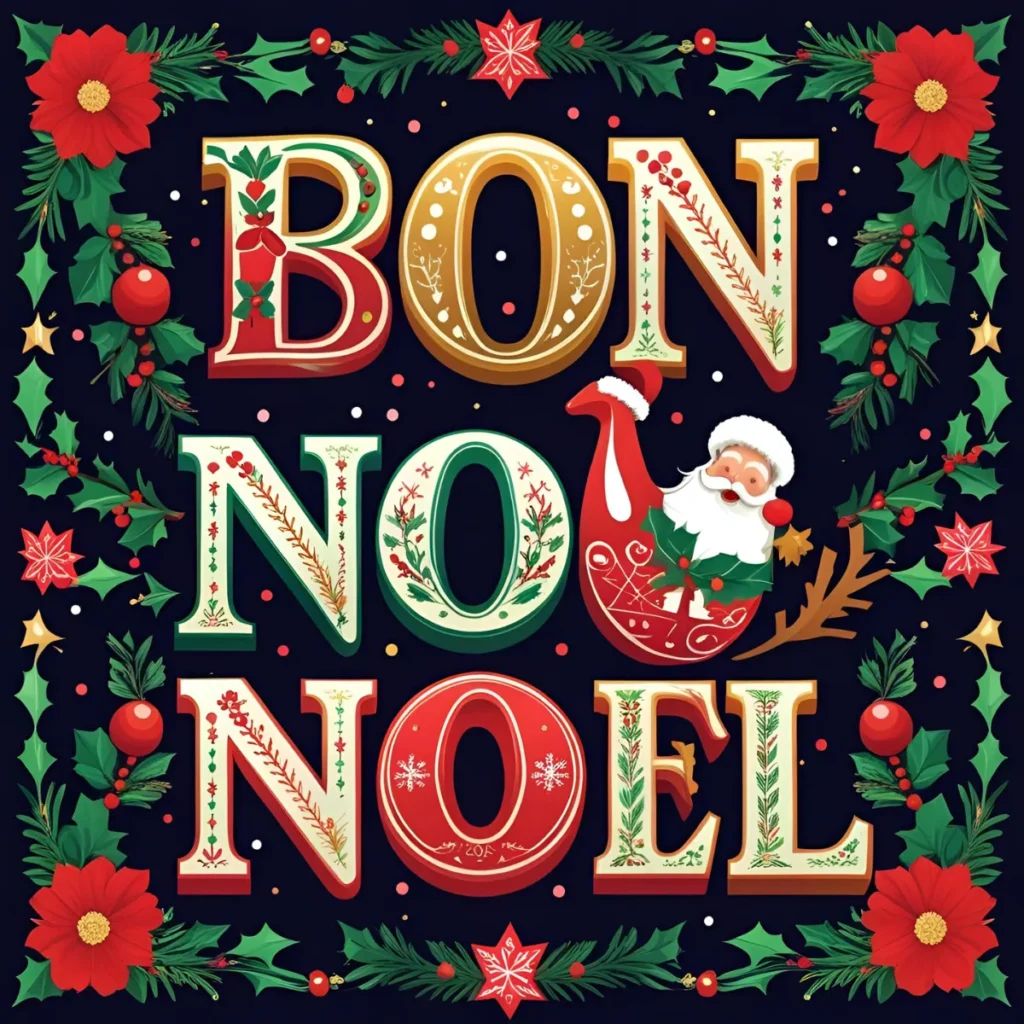
2. Bon Noël – Good Christmas
Origin:
A slightly less common variant, often used in southern France and Québec. “Bon” means “good”.
Example:
👤 User A: Bon Noël à toute la famille !
👤 User B: Merci ! Passez un bon réveillon.
Use: Informal and warm.
3. Joyeuses Fêtes – Happy Holidays
Origin:
Used to include both Christmas and New Year’s celebrations; common in modern, inclusive greetings.
Example:
👤 User A: Joyeuses fêtes, Sophie !
👤 User B: Merci, toi aussi !
Use: Great for emails, social settings, or when speaking broadly about the season.
4. Passe un Joyeux Noël – Have a Merry Christmas

Origin:
More personal and expressive. “Passe” comes from “passer,” meaning “to spend.”
Example:
👤 User A: Passe un joyeux Noël avec tes enfants !
👤 User B: Merci beaucoup ! Toi aussi !
Use: Informal and heartfelt.
5. Bonnes Fêtes de Fin d’Année – Happy End-of-Year Celebrations
Origin:
Used in formal settings or when referring to the full festive season (Christmas + New Year).
Example:
👤 User A: Bonnes fêtes de fin d’année, Monsieur Leclerc.
👤 User B: Merci, à vous également !
Use: Formal emails, business, or professional contexts.
6. Meilleurs Vœux pour Noël – Best Wishes for Christmas

Origin:
This elegant phrase appears in holiday cards and formal written wishes.
Example:
👤 User A: Meilleurs vœux pour Noël et la nouvelle année !
👤 User B: Merci, très gentil de ta part.
Use: Formal and refined; often used in writing.
7. Bon Réveillon – Enjoy Christmas Eve Dinner
Origin:
“Le réveillon” refers to the big festive meal on Christmas Eve (or New Year’s Eve). This greeting celebrates that tradition.
Example:
👤 User A: Bon réveillon ce soir !
👤 User B: Merci ! On a préparé une dinde énorme.
Use: Casual or festive; specific to Christmas Eve.
8. Joyeux Noël et Bonne Année – Merry Christmas and Happy New Year
Origin:
A two-in-one greeting, perfect for cards and public messages around late December.
Example:
👤 User A: Joyeux Noël et bonne année à tous !
👤 User B: Merci ! Plein de bonheur à toi aussi !
Use: Standard and complete; used broadly.
9. Je te souhaite un Joyeux Noël – I wish you a Merry Christmas
Origin:
A personal and warm phrasing that adds sincerity to the traditional greeting.
Example:
👤 User A: Je te souhaite un joyeux Noël rempli de bonheur.
👤 User B: Oh merci, c’est gentil !
Use: Intimate and heartfelt, great in cards or close relationships.
10. Noël Joyeux ! – Merry Christmas! (playful inversion)
Origin:
A poetic or artistic way to switch the phrase for fun or effect.
Example:
👤 User A: Noël joyeux à vous tous !
👤 User B: Merci ! C’est original !
Use: Less common, for creativity or emphasis.
11. Heureux Noël – Happy Christmas
Origin:
A rare but grammatically correct alternative, more poetic than colloquial.
Example:
👤 User A: Heureux Noël, mon ami !
👤 User B: Merci, à toi aussi !
Use: Literary or old-fashioned.
12. Bonnes Fêtes de Noël – Happy Christmas Celebrations
Origin:
Adds the word “Christmas” to the more general “Bonnes fêtes” for clarity.
Example:
👤 User A: Bonnes fêtes de Noël !
👤 User B: Merci, passe une belle soirée.
Use: Semi-formal, warm, and inclusive.
13. Bonne fête de Noël – Have a good Christmas holiday
Origin:
Often used in Canadian French, especially in Québec.
Example:
👤 User A: Bonne fête de Noël, ma belle !
👤 User B: Merci, gros bisous !
Use: Friendly, regional variation in Canada.
14. Un Noël magique à toi – A magical Christmas to you
Origin:
Used mostly in greeting cards and ads to evoke a sense of wonder and fantasy.
Example:
👤 User A: Je te souhaite un Noël magique !
👤 User B: C’est adorable, merci !
Use: Poetic and affectionate.
15. Que ton Noël soit rempli de joie – May your Christmas be filled with joy
Origin:
A warm and expressive wish, common in written form and emotional speeches.
Example:
👤 User A: Que ton Noël soit rempli de joie et de tendresse.
👤 User B: Merci, je te souhaite la même chose.
Use: Sentimental and kind, perfect for close friends or family.
FAQs
1. What is the most common way to say Merry Christmas in French?
The most common phrase is “Joyeux Noël.”
(Pronounced: zhwah-yuh no-elle)
2. What does “Joyeux Noël” literally mean?
It means “Joyful Christmas.”
3. How do you pronounce Noël correctly?
Say it like “no-ELL” with two clear syllables.
4. Can I just say “Noël” by itself?
Yes, Noël means Christmas, but to wish someone you need Joyeux Noël.
5. How to say Merry Christmas to a friend casually?
Still Joyeux Noël — it works both formal and informal.
6. How to say Merry Christmas and Happy New Year in French?
Say: “Joyeux Noël et Bonne Année.”
7. How do French people greet during Christmas season?
They often say “Joyeuses fêtes !” (Happy Holidays!)
8. Is Noël a male or female word in French?
Noël is masculine, but you don’t need to change anything when using the phrase.
9. Do people in France celebrate Christmas differently?
Yes, many families have a big dinner on Christmas Eve called “Le Réveillon.”
10. Can I write Merry Christmas in a card in French?
Yes! Write:
“Joyeux Noël à toi et à ta famille.” (Merry Christmas to you and your family.)
Conclusion:
Now that you know how to say Merry Christmas in French, you’re ready to spread holiday cheer the French way! From the classic “Joyeux Noël” to other festive expressions, adding a touch of French to your greetings can make the season feel even more magical.