Knowing how to say later in English helps you sound natural, polite, and clear in conversations. In this guide, you’ll learn simple words and phrases to use “later” in everyday situations, whether you’re talking to friends, family, or at work.
Saying “later” in English might sound simple, but it can express everything from a casual goodbye to a promise of future action. Depending on tone and situation, it can mean “see you soon,” “I’ll do it afterward,” or even “not now.” Whether you’re chatting with friends, texting someone, or replying politely, understanding how to say and use later correctly helps you sound natural and fluent.
Say Later in English
Let’s explore 15 common ways to say “later” with meanings, examples, and usage tips.Sometimes, you want to tell someone you’ll do something later, but you’re not sure how to say it in English.
Learn how to say “later” in English with 15 natural expressions and examples. Discover meanings, pronunciation, and how to use “later” in daily conversations.
1. Later /ˈleɪ.tər/ – “See you later”

Meaning: A casual farewell used in everyday conversation.
Example:
👤 A: Bye, talk soon!
👤 B: Later!
Use: Very informal; perfect for friends and peers.
2. See you later
Meaning: A friendly way to say goodbye with the idea of meeting again soon.
Example:
👤 A: I’ll message you after work.
👤 B: Cool, see you later!
Use: Neutral and polite — works in most situations.
3. Talk to you later (TTYL)
Meaning: You’ll continue the conversation in the future.
Example:
👤 A: I’ve got to go now.
👤 B: No problem, talk to you later!
Use: Common in texts and casual speech.
4. Catch you later
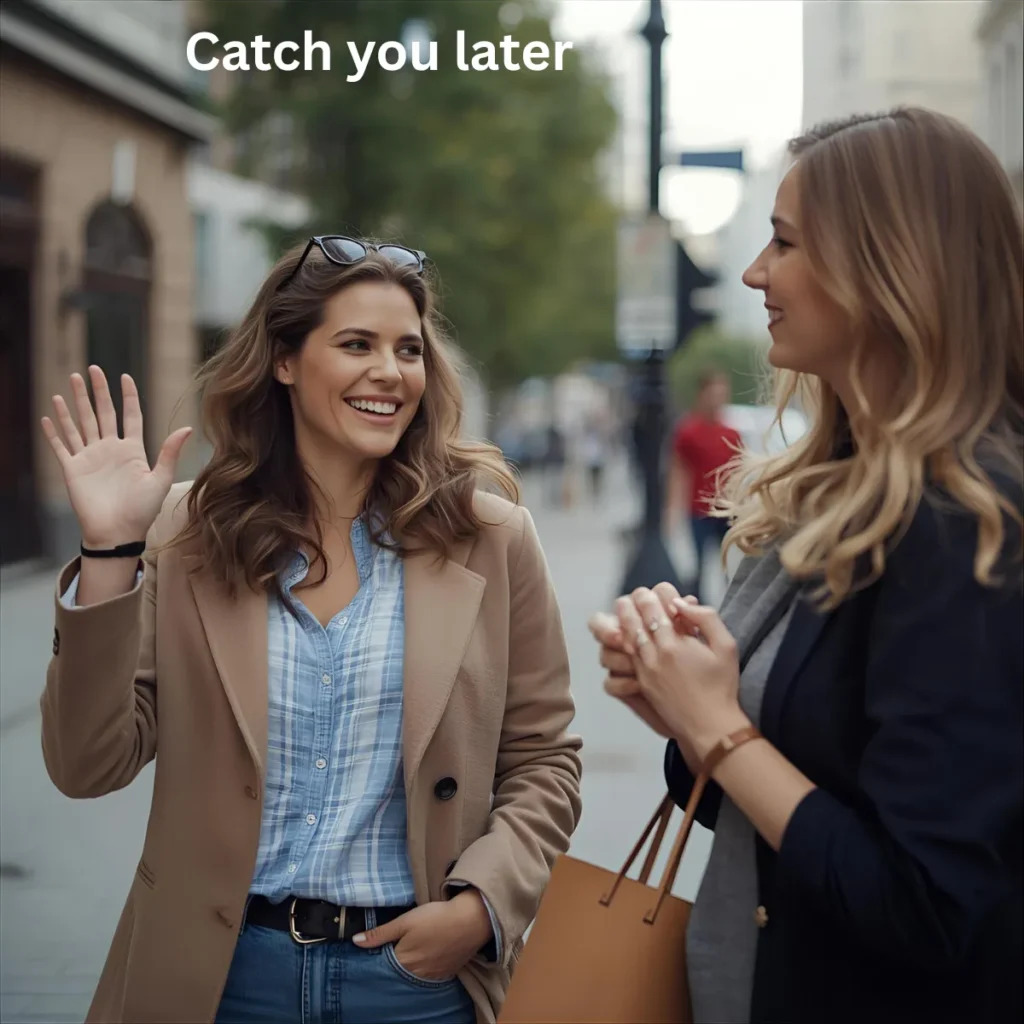
Meaning: Slang for “see you later,” often among friends.
Example:
👤 A: I’m heading out!
👤 B: Alright, catch you later, bro.
Use: Informal and friendly; mostly American English.
5. Later on
Meaning: Refers to a time in the near or distant future.
Example:
👤 A: When will you call him?
👤 B: I’ll call him later on today.
Use: Neutral and common in spoken and written English.
6. Do it later
Meaning: To delay an action until the future.
Example:
👤 A: Should we clean now?
👤 B: Nah, we’ll do it later.
Use: Informal, often used in casual speech.
7. See you later, alligator
Meaning: A fun, rhyming way to say goodbye (children’s phrase).
Example:
👤 A: See you later, alligator!
👤 B: After a while, crocodile!
Use: Playful and friendly; often used with kids.
8. Maybe later

Meaning: A polite way to say “not now” without refusing completely.
Example:
👤 A: Want to hang out?
👤 B: Maybe later, I’m busy right now.
Use: Neutral and gentle refusal.
9. Later that day
Meaning: Used in storytelling to describe time progression.
Example:
👤 Narrator: Later that day, it started to rain.
Use: Common in writing and narration.
10. Later than expected
Meaning: Something happened after the planned time.
Example:
👤 A: You came later than expected!
👤 B: Traffic was terrible!
Use: Polite and formal enough for general use.
11. Until later
Meaning: A short and warm goodbye meaning “until we meet again.”
Example:
👤 A: Farewell, my friend.
👤 B: Until later.
Use: Slightly poetic; formal or sentimental tone.
12. Later, dude
Meaning: Slang for a casual goodbye among young people.
Example:
👤 A: Gotta run!
👤 B: Later, dude!
Use: Very informal and modern.
13. I’ll tell you later
Meaning: Promise to explain or reveal something afterward.
Example:
👤 A: What happened at the meeting?
👤 B: I’ll tell you later.
Use: Natural in casual and serious settings.
14. See you later tonight

Meaning: To confirm a future meeting the same day.
Example:
👤 A: Dinner plans still on?
👤 B: Yep, see you later tonight!
Use: Common in friendly or romantic contexts.
15. Till later
Meaning: A soft farewell meaning “until we meet again.”
Example:
👤 A: Goodbye for now.
👤 B: Till later, my friend.
Use: Polite and warm — used in British English or formal writing.
FAQs:
Q1: What is the correct pronunciation of “later”?
A: It’s pronounced /ˈleɪ.tər/ in British English and /ˈleɪ.dɚ/ in American English.
Q2: Is “see you later” formal or informal?
A: It’s neutral — works in both casual and polite situations.
Q3: What’s the difference between “later” and “after”?
A: Later is more general, while after is usually followed by a specific event (e.g., after lunch).
Q4: Can I use “later” alone as a goodbye?
A: Yes — saying Later! is common among friends.
Q5: What does “maybe later” mean?
A: It means “not now,” often used to politely delay a decision or action.
Q6: Is “till later” the same as “until later”?
A: Yes, “till” and “until” are interchangeable here; both sound friendly.
Q7: How do you use “later on”?
A: Use it when referring to something happening in the near future — I’ll see you later on.
Q8: Is “catch you later” slang?
A: Yes, it’s casual slang meaning “see you soon,” mostly used with friends.
Q9: What are polite ways to say “later”?
A: Until later, see you later, or later on sound polite in most situations.
Q10: What’s a fun way to say “later”?
A: Try See you later, alligator! — a playful and classic rhyme.
Conclusion:
Knowing how to say later in different ways makes your English sound more natural and expressive. From fun goodbyes like Catch you later to polite expressions like Until later, these phrases help you handle any casual or friendly farewell with ease and confidence.