
knowing how to say I miss you in Spanish is both meaningful and essential. The most common phrase is “Te extraño,” widely used in Latin America, while “Te echo de menos” is more common in Spain.
Whether you’re talking to a friend, a family member, or someone special, learning how to say I miss you in Spanish helps you express emotion and deepen your personal connections in a heartfelt way.
It’s a simple phrase that carries a lot of love and emotion.
Using the right expression in the right region also shows cultural awareness. With just a few words, you can make someone feel remembered and appreciated.
I Miss You in Spanish
15 Ways to Say I Miss You in Spanish
| No. | Spanish Phrase | English Meaning | Use / Tone |
|---|---|---|---|
| 1 | Te extraño | I miss you | Standard in Latin America |
| 2 | Te echo de menos | I miss you | Common in Spain |
| 3 | Me haces falta | I need you / I miss you | Emotional, deeper |
| 4 | Siento tu ausencia | I feel your absence | Poetic |
| 5 | Pienso en ti | I think of you | Gentle, affectionate |
| 6 | Me faltas | You’re missing from me | Romantic/close |
| 7 | Me haces falta cada día | I miss you every day | Emotional tone |
| 8 | Extraño tu voz | I miss your voice | Personal, romantic |
| 9 | Extraño tu sonrisa | I miss your smile | Sweet, caring |
| 10 | Echo de menos estar contigo | I miss being with you | Warm, close |
| 11 | Me duele no verte | It hurts not to see you | Emotional |
| 12 | Te necesito | I need you | Stronger, passionate |
| 13 | Me acuerdo de ti | I remember you | Soft, friendly |
| 14 | Ojalá estuvieras aquí | I wish you were here | Expressing longing |
| 15 | Cuento los días para verte | I’m counting the days to see you | Romantic |
1. Te extraño
Origin:
Used mostly in Latin America, “extrañar” literally means “to find something strange,” but evolved to mean “to miss” someone emotionally.
Example:
👤 A: ¿Te vas hoy?
👤 B: Sí…
👤 A: Te voy a extrañar mucho.
👤 B: Yo también. 😔
Use: Most common in Latin America. Neutral, sincere.
2. Te echo de menos

Origin:
This phrase is used in Spain. It literally translates as “I throw you less,” which historically meant “I notice your absence.”
Example:
👤 A: ¿Hace cuánto que no nos vemos?
👤 B: ¡Te echo de menos cada día!
👤 A: Yo también, amigo.
Use: Spain; formal or poetic.
3. Me haces falta
Origin:
Means “you are lacking to me” or “I need you.” It conveys not just missing, but emotional need.
Example:
👤 A: Me haces mucha falta desde que te fuiste.
👤 B: A mí también me haces falta. 💔
Use: Deeper emotional tone, often romantic.
4. Estoy pensando en ti
Origin:
Literally “I am thinking about you.” While not a direct translation, it’s used as a soft way to say you miss someone.
Example:
👤 A: Hola, solo quería decirte que estoy pensando en ti.
👤 B: Qué lindo… yo también en ti.
Use: Subtle, romantic, or friendly.
5. Quisiera que estuvieras aquí
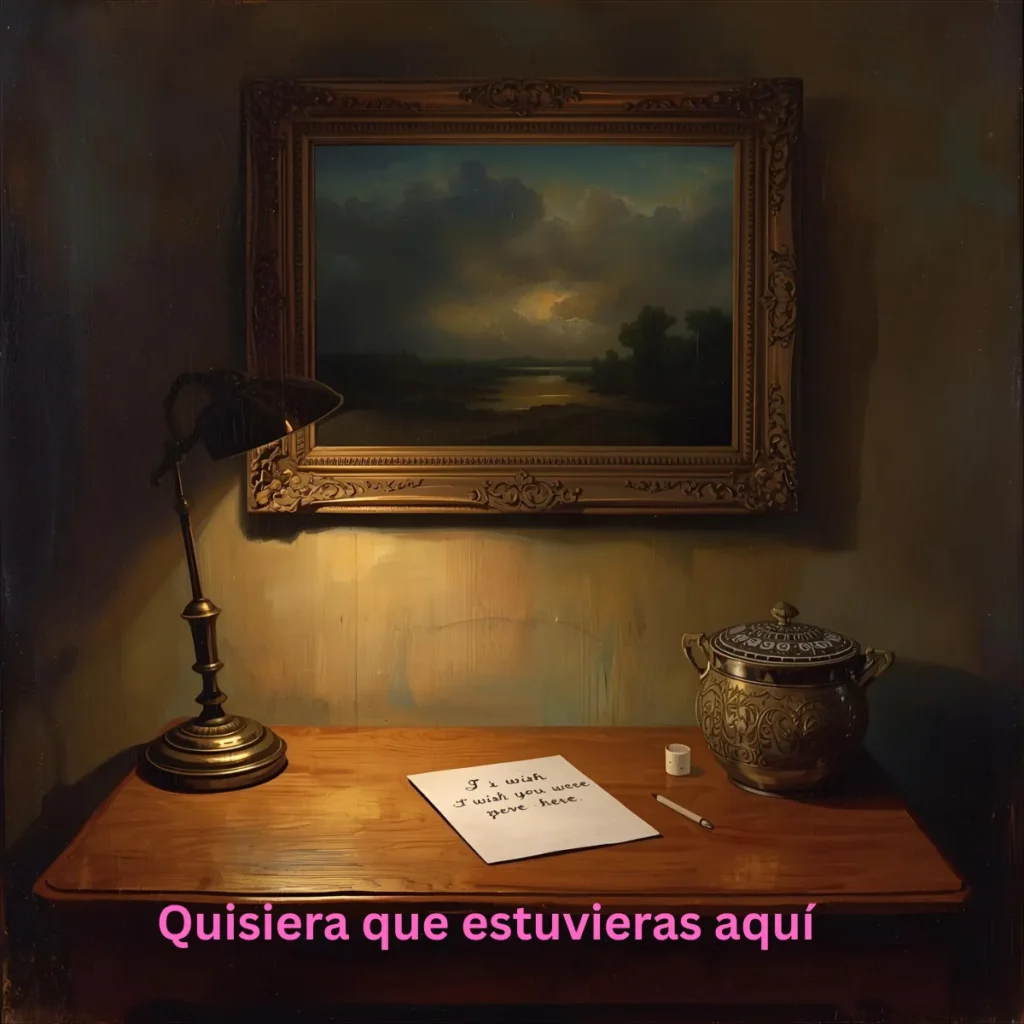
Origin:
Means “I wish you were here.” Often used in texts or postcards to express longing.
Example:
👤 A: Esta playa es hermosa…
👤 B: Quisiera que estuvieras aquí para verla conmigo.
Use: Sentimental, expressive.
6. No dejo de pensar en ti
Origin:
“I can’t stop thinking about you.” It expresses constant emotional presence.
Example:
👤 A: ¿Estás bien?
👤 B: No dejo de pensar en ti desde que te fuiste…
Use: Intense emotional tone; romantic or very close friendship.
7. Te llevo en mi corazón

Origin:
Means “I carry you in my heart.” A poetic phrase used in writing or deep romantic/family bonds.
Example:
👤 A: Aunque estés lejos, te llevo en mi corazón.
👤 B: Qué hermoso. Yo también a ti.
Use: Romantic or spiritual.
8. Siento tu ausencia
Origin:
“I feel your absence.” More formal and poetic, often used in literature or messages of mourning.
Example:
👤 A: Cada día siento tu ausencia más fuerte.
👤 B: Lo sé… y yo la tuya.
Use: Formal, dramatic, or poetic.
9. Me acuerdo mucho de ti
Origin:
Means “I remember you a lot.” Used when reminiscing or expressing ongoing thoughts about someone.
Example:
👤 A: Me acuerdo mucho de ti cuando paso por este lugar.
👤 B: Yo también lo recuerdo contigo.
Use: Friendly, nostalgic, or soft romantic.
10. Desearía verte pronto
Origin:
“I wish to see you soon.” A wishful, polite way of saying you miss someone.
Example:
👤 A: Desearía verte pronto, te extraño.
👤 B: Yo también. ¡Ojalá pronto!
Use: Neutral, works in all relationships.
11. Hay un vacío sin ti

Origin:
“There’s a void without you.” A deeply emotional way to express someone’s absence.
Example:
👤 A: Hay un vacío sin ti en casa.
👤 B: Ay, me hiciste llorar…
Use: Deep romantic or grief-related.
12. Cada día te extraño más
Origin:
“Every day I miss you more.” A natural intensifier often used in romantic expressions.
Example:
👤 A: Cada día te extraño más, mi amor.
👤 B: Y yo a ti. Contando los días para verte.
Use: Romantic or emotional relationships.
13. No es lo mismo sin ti
Origin:
“It’s not the same without you.” Popular in songs and poetry.
Example:
👤 A: No es lo mismo sin ti en la oficina.
👤 B: ¡Ay, qué lindo! Los extraño también.
Use: Friendly or romantic.
14. Ojalá estuvieras aquí
Origin:
“Hopefully you were here.” Common in spoken Spanish to express longing.
Example:
👤 A: Esta noche de estrellas… ojalá estuvieras aquí.
👤 B: Me encantaría estar contigo.
Use: Romantic, poetic, or wistful.
15. Te necesito
Origin:
“I need you.” While more direct, it can express deep emotional dependence and longing.
Example:
👤 A: Te necesito más de lo que imaginaba.
👤 B: Yo también… vuelve pronto.
Use: Intense; used in romantic or close family situations.
Conclusion:
Now that you’ve learned how to say I miss you in Spanish, you can express your emotions more deeply and sincerely in any Spanish-speaking context. Whether you say “Te extraño” or “Te echo de menos,” both phrases beautifully convey your feelings of longing and affection.
These expressions are powerful tools for maintaining emotional bonds across distance and time.
Keep practicing how to say I miss you in Spanish to build emotional fluency and connect more meaningfully with others.