Learning how to say hello in Ukrainian is the first step to connecting with locals and experiencing the warmth of Ukrainian culture. Whether you’re traveling, meeting new people, or exploring the language, greeting someone properly sets a friendly tone.
In Ukrainian, different greetings are used depending on the time of day and the level of formality, making it both practical and interesting to learn.
Say Hello In Ukrainian
Get ready to sound confident and culturally aware with these 15 Ukrainian greetings, each paired with a sample dialogue and a bit of background so you’ll understand when and how to use them.
15 Ways to Say Hello in Ukrainian (with Meanings)
| # | Ukrainian Phrase | Pronunciation | Meaning / Use |
|---|---|---|---|
| 1 | Привіт | pry-VEET | Hello (casual, friends) |
| 2 | Добрий день | DOH-briy den | Good day / Hello (polite / formal) |
| 3 | Добрий ранок | DOH-briy RA-nok | Good morning |
| 4 | Добрий вечір | DOH-briy VE-chir | Good evening |
| 5 | Вітаю | vee-TAH-yu | Greetings (formal or general) |
| 6 | Алло | ah-LOH | Hello (on the phone) |
| 7 | Йо | yo | Very casual “yo” style greeting (friends) |
| 8 | Здоров | zda-ROV | Slang hello, mostly among young people |
| 9 | Привіт всім! | pry-VEET v-seem | Hello everyone! |
| 10 | Хай! | hi | Informal “Hi!” similar to English |
| 11 | Салют | sah-LYUT | “Salut,” friendly European-style greeting |
| 12 | Доброго дня | DOH-bro-ho dnya | Very polite version of “Good day” |
| 13 | Мир вам! | meer vam | “Peace to you” (warm, traditional greeting) |
| 14 | Як справи? | yak SPRA-vy | Hello + How are things? (casual) |
| 15 | Радий тебе бачити | RA-dyy TE-be BAH-chi-ty | Nice to see you (said by a male) |
1. Привіт (Pryvít) — Hi
Origin & Use:
The most common and casual greeting in Ukrainian. It’s used among friends, peers, and people your age.
Example:
👤 User A: Привіт, Оксано! Як справи?
👤 User B: Привіт! Все добре, дякую.
Meaning: “Hi, Oksana! How are things?”
Response: “Hi! All’s good, thank you.”
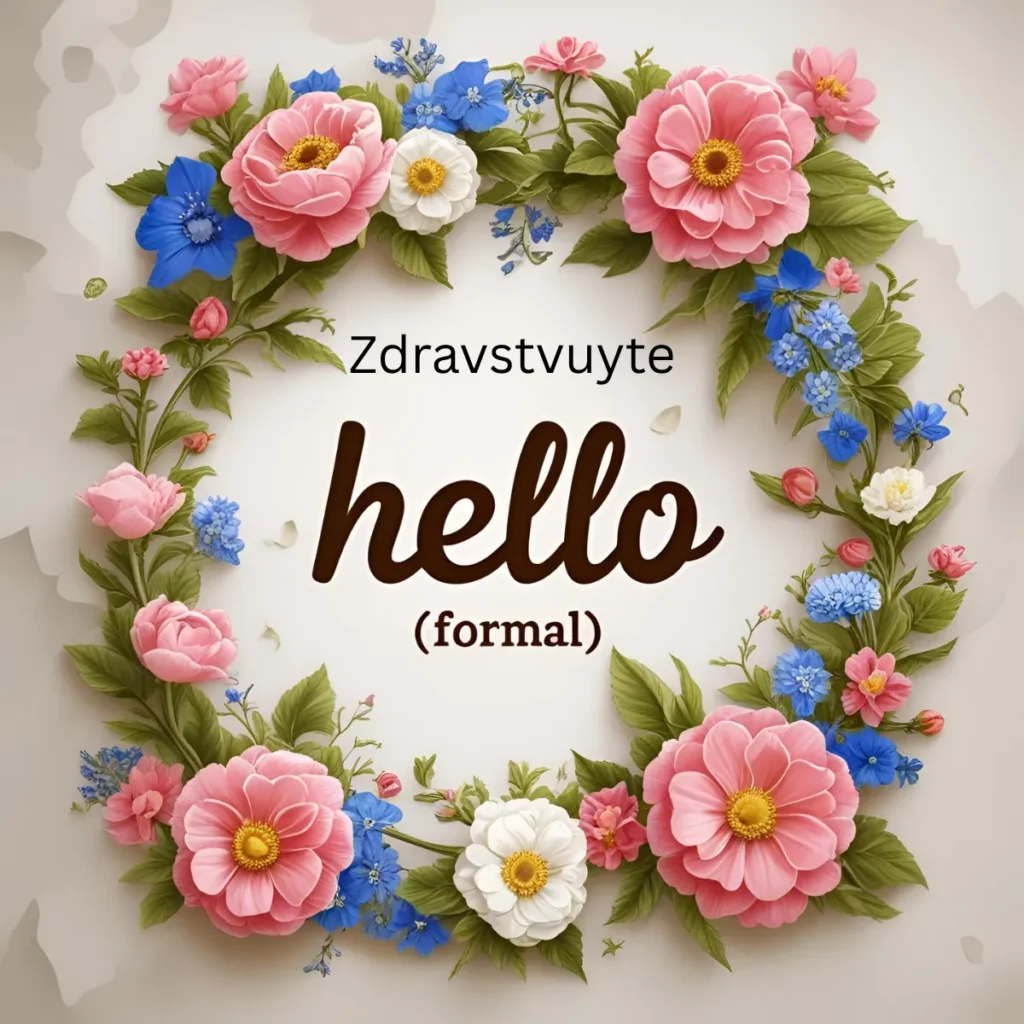
2. Здравствуйте (Zdravstvuyte) — Hello (formal)
Origin & Use:
Borrowed from Russian and still used in Eastern Ukraine. It’s very formal and respectful, typically in professional or official contexts.
Example:
👤 User A: Здравствуйте, пані Ірино.
👤 User B: Доброго дня, приємно вас бачити.
Meaning: “Hello, Ms. Iryna.”
Response: “Good day, nice to see you.”
3. Добрий день (Dó-bryi den’) — Good afternoon / Hello
Origin & Use:
A very common and polite greeting in all regions of Ukraine, suitable in almost any situation.
Example:
👤 User A: Добрий день! Це офіс директора?
👤 User B: Так, заходьте, будь ласка.
Meaning: “Good afternoon! Is this the director’s office?”
Response: “Yes, please come in.”
4. Добрий ранок (Dó-bryi rá-nok) — Good morning

Origin & Use:
Used in the morning hours, in both casual and formal situations.
Example:
👤 User A: Добрий ранок, мамо!
👤 User B: Добрий ранок, люба. Сніданок готовий.
Meaning: “Good morning, Mom!”
Response: “Good morning, dear. Breakfast is ready.”
5. Добрий вечір (Dó-bryi véchir) — Good evening
Origin & Use:
Used in the evening, often in polite conversations, both socially and professionally.
Example:
👤 User A: Добрий вечір, пане Василю.
👤 User B: Добрий вечір! Радий вас бачити.
Meaning: “Good evening, Mr. Vasyl.”
Response: “Good evening! Glad to see you.”
6. Вітаю (Vitáyu) — Greetings / I greet you
Origin & Use:
More formal and ceremonial, used in speeches, celebrations, or when meeting someone officially.
Example:
👤 User A: Вітаю, шановні гості!
👤 User B: Дякуємо! Нам приємно бути тут.
Meaning: “Greetings, dear guests!”
Response: “Thank you! We’re glad to be here.”
7. Йо (Yo) — Yo / Hey

Origin & Use:
Urban slang, often used among Ukrainian youth in major cities like Kyiv and Lviv.
Example:
👤 User A: Йо, ти йдеш на концерт сьогодні?
👤 User B: Йо! Звісно!
Meaning: “Yo, are you going to the concert tonight?”
Response: “Yo! Of course!”
8. Салют (Salyút) — Hi / Salute
Origin & Use:
Borrowed from French (“salut”) and used informally. Popular among teens or in texts/messages.
Example:
👤 User A: Салют! Давно не бачились.
👤 User B: Салют! Як справи?
Meaning: “Hey! Long time no see.”
Response: “Hey! How are things?”
9. Чао (Chao) — Ciao / Hi & Bye
Origin & Use:
Adopted from Italian, used mostly among younger people or when being playful.
Example:
👤 User A: Чао, красуне!
👤 User B: Чао! Дзвони мені пізніше.
Meaning: “Ciao, beautiful!”
Response: “Ciao! Call me later.”
10. Хай (Khay) — Hi (phonetic version of “hi”)
Origin & Use:
A borrowed and adapted version of the English “hi,” mostly seen in digital chat or texts.
Example:
👤 User A: Хай! Що нового?
👤 User B: Хай! Усе по-старому.
Meaning: “Hi! What’s new?”
Response: “Hi! Same old.”
11. Алло (Alló) — Hello (on the phone)
Origin & Use:
Used when answering a phone call. Comes from the French “Allô”.
Example:
👤 User A: Алло? Це Андрій?
👤 User B: Так, слухаю.
Meaning: “Hello? Is this Andriy?”
Response: “Yes, speaking.”
12. Здоров (Zdorov) — Yo / Hi (masculine slang)
Origin & Use:
Slang greeting, mainly among men; comes from the root “здоров’я” meaning “health.”
Example:
👤 User A: Здоров, брате!
👤 User B: Здоров! Давно не бачив.
Meaning: “Yo, bro!”
Response: “Yo! Long time no see.”
13. Здрастуй (Zdrástuy) — Hello (semi-formal)
Origin & Use:
A slightly less formal form of “Zdravstvuyte,” often used one-on-one with someone older or respected.
Example:
👤 User A: Здрастуй, тітко Маріє!
👤 User B: Здрастуй, дитино. Як навчання?
Meaning: “Hello, Aunt Maria!”
Response: “Hello, child. How’s school?”
14. Гей (Hey) — Hey (attention-getting)
Origin & Use:
Used to get someone’s attention, similar to the English “Hey!” but not commonly used as a greeting alone.
Example:
👤 User A: Гей! Ти впустив телефон!
👤 User B: О, дякую!
Meaning: “Hey! You dropped your phone!”
Response: “Oh, thank you!”
15. Здрастуйте всі (Zdravstvuyte vsi) — Hello everyone
Origin & Use:
Polite and formal group greeting, used to address multiple people.
Example:
👤 User A: Здрастуйте всі! Радий вас бачити.
👤 User B: Здрастуйте! Ми також раді.
Meaning: “Hello everyone! Glad to see you.”
Response: “Hello! We’re glad too.”
FAQs
1. How do you say “hello” in Ukrainian?
The most common word is “Привіт” (Pryvit) — used with friends.
2. How do you say a polite hello?
Use “Добрий день” (Dobryy den’) — means Good day (formal).
3. How do you pronounce “Привіт (Pryvit)”?
Pronunciation: pree-VEET ✅
4. What is the morning greeting in Ukrainian?
“Добрий ранок” (Dobryy ranok) — means Good morning.
5. How do you say hello at night?
Say “Добрий вечір” (Dobryy vechir) — Good evening.
6. Is “Привіт” informal?
Yes, “Pryvit” is friendly and casual.
7. How do you greet a group of people politely?
Say “Вітаю всіх!” (Vitayu vsikh!) — means Greetings everyone!
8. Is there a very formal greeting?
Yes — “Вітаю” (Vitayu) is more formal than Pryvit.
9. How do you say “Hello, how are you?”
Say “Привіт, як ти?” (Pryvit, yak ty?) — informal
Or “Добрий день, як ви?” (Dobryy den’, yak vy?) — formal
10. Do Ukrainians shake hands when saying hello?
Yes, often — especially in professional or polite settings.
Conclusion:
In short, learning how to say hello in Ukrainian helps you make a positive impression and connect more deeply with the culture.
From casual encounters to formal situations, using the right greeting shows respect and friendliness. With just a few simple phrases, you can open the door to meaningful conversations and warm interactions in Ukraine.