
How to Say Good Luck in Spanish is an essential phrase for wishing someone success, encouragement, or positive outcomes.
Whether you’re cheering on a friend, congratulating a colleague, or giving support before an important event, knowing the right expressions will make your Spanish sound natural and thoughtful.
The most common phrase is ¡Buena suerte!, used in almost any situation. Learning alternative expressions will help you convey warmth, enthusiasm, and sincerity in different contexts.
Good Luck in Spanish
15 Ways to Say Good Luck in Spanish
| No. | Spanish Phrase | Pronunciation | Meaning / Usage |
|---|---|---|---|
| 1 | ¡Buena suerte! | BWEH-nah SWER-teh | Good luck (most common) |
| 2 | ¡Mucha suerte! | MOO-chah SWER-teh | Lots of luck |
| 3 | ¡Que te vaya bien! | keh teh VAI-yah BYEN | Hope it goes well |
| 4 | ¡Éxitos! | EHK-see-tos | Success! / Good luck |
| 5 | ¡Que tengas suerte! | keh TEN-gahs SWER-teh | Wishing you luck |
| 6 | ¡Suerte! | SWER-teh | Luck! (short, casual) |
| 7 | ¡Todo irá bien! | TOH-doh ee-RAH BYEN | Everything will go well |
| 8 | ¡A por todas! | ah por TOH-das | Go for it! / Give it your all |
| 9 | ¡Triunfa! | TREE-oon-fah | Triumph! / Succeed! |
| 10 | ¡Que tengas éxito! | keh TEN-gahs EHK-see-toh | Wishing you success |
| 11 | ¡Vamos, tú puedes! | VAH-mos, too PWEH-des | Come on, you can do it! |
| 12 | ¡Confío en ti! | kon-FEE-oh en tee | I trust in you |
| 13 | ¡Que todo salga bien! | keh TOH-doh SAL-gah BYEN | Hope everything goes well |
| 14 | ¡Éxito total! | EHK-see-toh to-TAL | Total success / Good luck |
| 15 | ¡A triunfar! | ah TREE-oon-far | Go succeed! / Go win! |
Let’s explore 15 popular ways to say good luck in Spanish, with real conversation examples and insight into where each phrase comes from or how it’s used.
1. ¡Buena suerte!
Meaning: Good luck!

Example:
👤 Usuario A: Tengo una entrevista de trabajo hoy.
👤 Usuario B: ¡Buena suerte! ¡Tú puedes!
Origin: This is the most direct and widely used translation of “good luck.” It’s universal across all Spanish-speaking countries.
Use: Neutral and appropriate for any occasion.
2. ¡Suerte!
Meaning: Luck! (Shortened form of “Buena suerte”)
Example:
👤 Usuario A: Voy al examen.
👤 Usuario B: ¡Suerte!
Origin: Informal and widely used among friends. It’s a shortened form that’s quicker and more casual.
Use: Everyday, friendly interactions.
3. ¡Mucha suerte!
Meaning: Lots of luck!
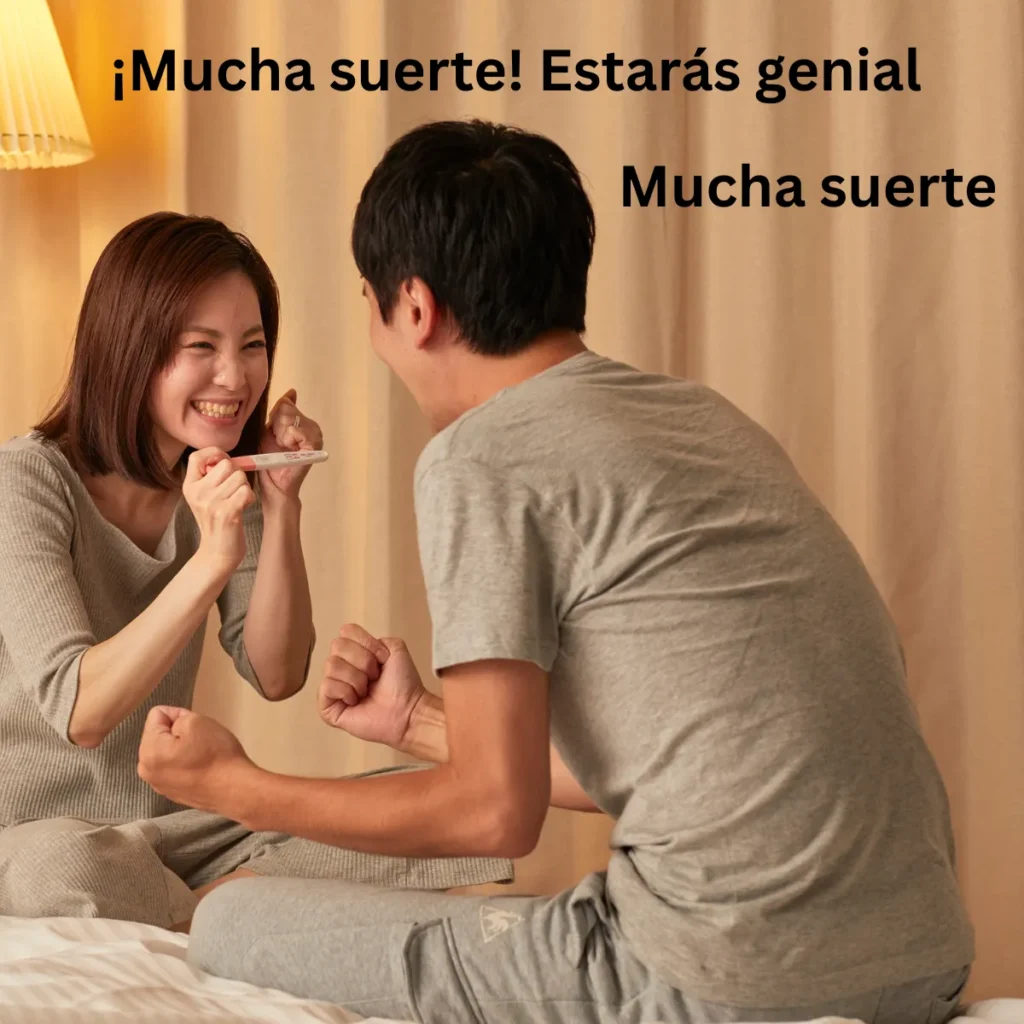
Example:
👤 Usuario A: Mañana compito en el torneo.
👤 Usuario B: ¡Mucha suerte! Estarás genial.
Origin: Adds emphasis to the basic “¡suerte!”—a way to show extra encouragement.
Use: Informal but enthusiastic.
4. ¡Que tengas suerte!
Meaning: May you have luck.
Example:
👤 Usuario A: Me voy a la audición.
👤 Usuario B: ¡Que tengas suerte!
Origin: Subjunctive construction used to express a wish or hope.
Use: Semi-formal and polite; also suitable in writing.
5. ¡Te deseo lo mejor!
Meaning: I wish you the best.
Example:
👤 Usuario A: Empiezo mi nuevo trabajo el lunes.
👤 Usuario B: ¡Te deseo lo mejor!
Origin: Not a literal translation of “good luck” but conveys deep support and positivity.
Use: Warm and often used in heartfelt conversations.
6. ¡Éxitos!
Meaning: Success!

Example:
👤 Usuario A: Tengo mi presentación final hoy.
👤 Usuario B: ¡Éxitos!
Origin: More common in Latin American countries like Colombia, Venezuela, and Argentina.
Use: Short and professional; often used in emails or formal settings.
7. ¡Que te vaya bien!
Meaning: Hope it goes well for you.
Example:
👤 Usuario A: Me voy al médico.
👤 Usuario B: ¡Que te vaya bien!
Origin: Idiomatic expression in Spanish. Literally means “That it goes well for you.”
Use: Everyday conversations, polite and kind.
8. ¡Que todo salga bien!
Meaning: Hope everything turns out well.
Example:
👤 Usuario A: Hoy es la boda de mi hermana.
👤 Usuario B: ¡Que todo salga bien!
Origin: Often used when the person is involved in organizing or participating in an important event.
Use: Slightly more formal, thoughtful tone.
9. ¡Te va a ir genial!
Meaning: You’re going to do great!
Example:
👤 Usuario A: Estoy nervioso por el discurso.
👤 Usuario B: ¡Te va a ir genial, no te preocupes!
Origin: Colloquial and optimistic phrase used to boost confidence.
Use: Friendly and encouraging.
10. ¡Te deseo mucha suerte!
Meaning: I wish you lots of luck.

Example:
👤 Usuario A: Empiezo la universidad mañana.
👤 Usuario B: ¡Te deseo mucha suerte en esta nueva etapa!
Origin: A longer and more heartfelt version of “¡Buena suerte!”
Use: Polite and warm; suitable for important life events.
11. ¡Rómpete una pierna!
Meaning: Break a leg!
Example:
👤 Usuario A: Tengo mi actuación de teatro esta noche.
👤 Usuario B: ¡Rómpete una pierna!
Origin: Borrowed from English theater culture. Ironically wishing bad luck to prevent bad luck.
Use: Humorous or theatrical settings.
12. ¡A por todas!
Meaning: Go for it! / Give it your all!

Example:
👤 Usuario A: ¿Crees que puedo ganar?
👤 Usuario B: ¡Claro! ¡A por todas!
Origin: Spain; used in sports and motivational contexts.
Use: Energetic and encouraging; informal.
13. ¡Vamos! / ¡Dale!
Meaning: Let’s go! / Go for it!
Example:
👤 Usuario A: ¿Listo para la carrera?
👤 Usuario B: ¡Vamos! ¡Dale!
Origin: “¡Vamos!” is common in Spain and Latin America; “¡Dale!” is especially popular in Argentina and Cuba.
Use: Informal, motivating, energetic.
14. ¡Todo saldrá bien!
Meaning: Everything will turn out fine.
Example:
👤 Usuario A: Estoy preocupado por la operación.
👤 Usuario B: Tranquilo, ¡todo saldrá bien!
Origin: Expression of reassurance, not a direct “good luck” phrase, but commonly used when someone is nervous.
Use: Warm and comforting.
15. ¡Con toda!
Meaning: Give it your all! / With everything!
Example:
👤 Usuario A: ¿Cómo debo enfrentar el examen?
👤 Usuario B: ¡Con toda! Tú puedes.
Origin: Colombian slang meaning to give full effort.
Use: Youthful, trendy, and regional.
Conclusion:
knowing how to say good luck in Spanish helps you encourage and support others in a natural and heartfelt way. From the standard ¡Buena suerte! to alternative expressions like ¡Que te vaya bien! or ¡Éxitos!, each phrase carries positivity and care. By practicing these, you’ll not only sound more fluent but also strengthen your connections with Spanish speakers.


